TL;DR: Manufacturing facilities in Wisconsin need fire alarm systems that meet NFPA 72 standards, with inspection and testing frequencies ranging from weekly visual checks to annual full system tests. This is a compliance requirement, not an optional upgrade, and lapses can affect insurance coverage and inspection outcomes. Advanced Electric LLC installs and tests fire alarm systems for industrial clients across Wisconsin. Call (920) 921-2499.
Fire alarm and life safety systems for manufacturing facilities carry more weight than the same systems in a typical office building. Plants run heavy equipment, store combustible materials, and often operate around the clock, all of which raise the stakes if a fire alarm system is outdated, poorly designed, or not properly maintained.
Wisconsin manufacturers are required to maintain fire alarm systems that meet the National Fire Protection Association’s NFPA 72 standard, with specific testing and inspection schedules depending on the type of system installed. This is not a one-time install-and-forget system. It is an ongoing compliance obligation tied directly to insurance coverage and life safety.
This guide covers what a manufacturing facility’s fire alarm system actually needs to include, how often it needs to be tested, and what facility managers commonly get wrong about staying compliant.
What Fire Alarm Standard Applies to Manufacturing Facilities?
NFPA 72, the National Fire Alarm and Signaling Code, governs the design, installation, testing, and maintenance of fire alarm systems in manufacturing and industrial facilities, alongside applicable local fire codes. It sets both installation requirements and ongoing inspection and testing schedules.
NFPA 72 covers the full lifecycle of a fire alarm system: how it is designed and installed initially, and how often it needs to be inspected and tested afterward to remain compliant. Local fire departments and insurance carriers generally reference this standard directly when evaluating a facility’s system.
Manufacturing facilities also need to account for their specific environment: high ceilings, heavy equipment that can interfere with detection, combustible materials storage, and, in many cases, 24-hour operation. A system designed for a standard office layout is not automatically adequate for a production floor.
How Often Does a Fire Alarm System Need to Be Tested?
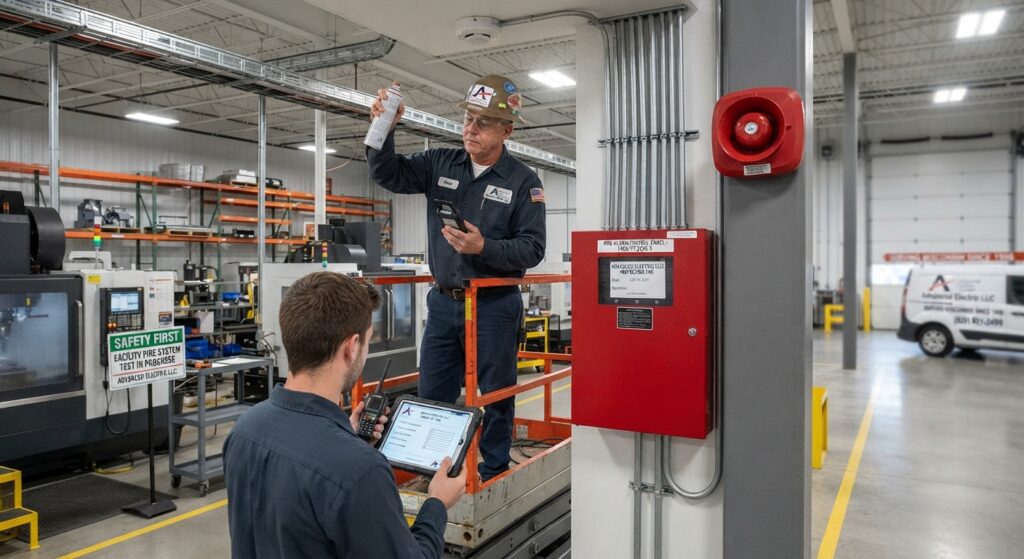
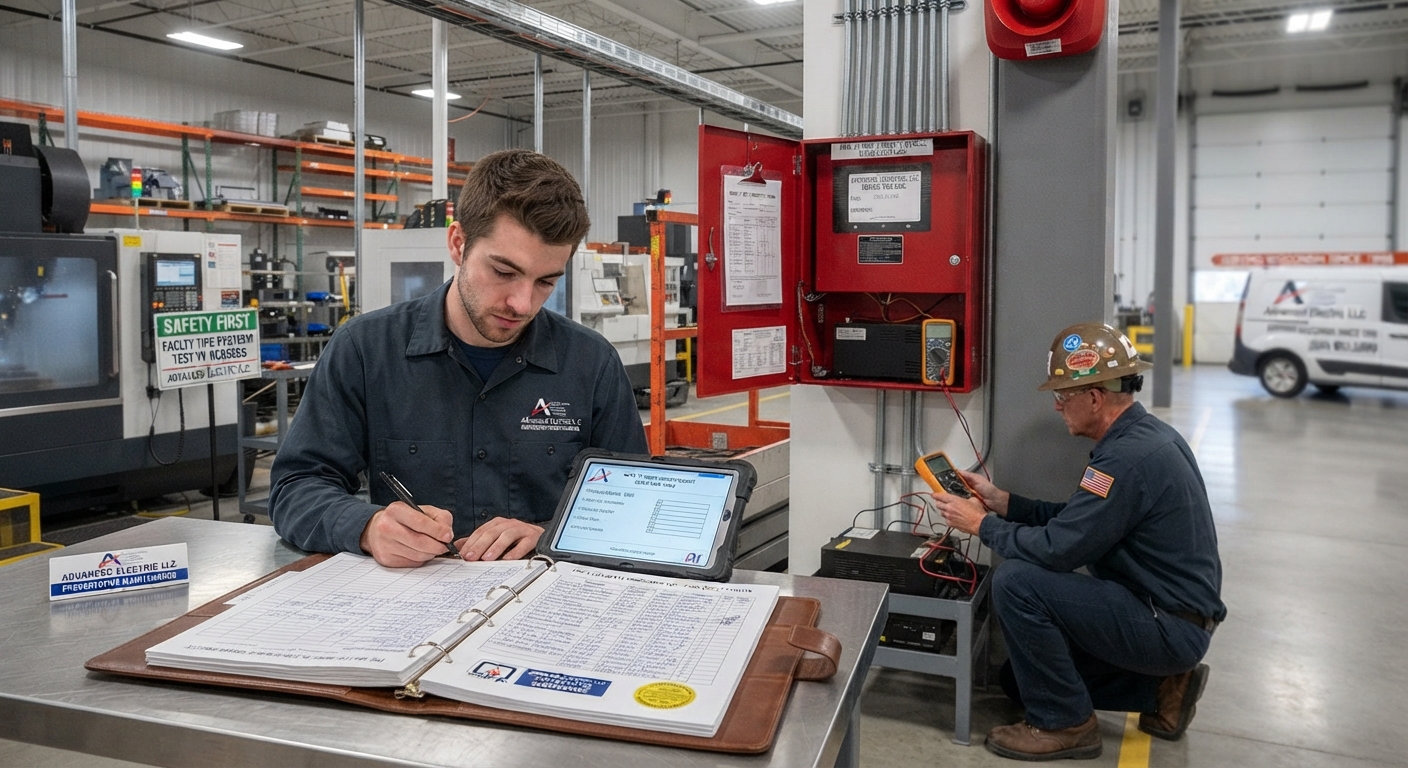
NFPA 72 establishes several inspection intervals depending on system type and monitoring status: weekly visual checks for some components, monthly and quarterly inspections for systems not connected to a monitoring service, and annual full system tests for systems connected to a supervising station, per industry summaries of the code’s testing tables.
In practice, most manufacturing facilities with a monitored fire alarm system need, at minimum, an annual full inspection and test, with more frequent checks of specific components like batteries and visual indicators happening on a shorter cycle. The exact schedule depends on the system’s configuration and any additional requirements from the local fire marshal or your insurance carrier.
Skipping or delaying required testing is one of the more common compliance gaps we see in older industrial buildings, often because the system technically still works day to day, which makes it easy to assume everything is fine without a documented test confirming it.
What a Fire Alarm System Actually Needs to Cover in a Plant Environment
A manufacturing facility’s fire alarm system typically needs smoke and heat detection appropriate for the specific hazards on the floor, since standard smoke detectors can produce false alarms or fail to detect properly in dusty or high-heat industrial environments. Detector selection matters as much as detector placement.
Notification is another area where industrial facilities have different needs than offices. A large, noisy production floor requires audible and visual alarm devices loud and bright enough to be noticed over equipment noise and across large open spaces, not just a standard horn-strobe sized for a hallway.
Fire alarm systems in manufacturing facilities are also frequently tied into other life safety and building systems: sprinkler monitoring, HVAC shutdown on alarm, and, in some facilities, integration with security and access control systems. Designing these systems together, rather than as separate afterthoughts, produces a more reliable result.
Coverage gaps are another common issue in older plant buildings. As production layouts change over the years, storage areas get relocated, and new equipment gets added, a fire alarm system’s original detector placement can end up with blind spots that were never present in the initial design. A periodic layout review catches this kind of drift before it becomes a real gap.
What Happens If a Facility’s Fire Alarm System Falls Out of Compliance?
A facility with an out-of-date or improperly maintained fire alarm system risks failed inspections, potential insurance coverage issues, and, in the event of an actual fire, a system that does not perform as intended. Insurance carriers in particular may treat lapsed testing documentation as a coverage issue after a claim.
This is one of the more underappreciated risks of deferred fire alarm maintenance. A facility might reasonably assume that a system which has not triggered a false alarm is working correctly, but proper functioning and documented, up-to-date testing are two different things, and only one of them satisfies a code inspection or an insurance claim review.
Fire Alarms and Security Systems Often Go Together
Many manufacturing facilities are also evaluating or upgrading security systems around the same time they address fire alarm compliance, since both fall under the same general category of building life safety and asset protection infrastructure.
Advanced Electric LLC installs and services both fire alarm and security systems for industrial clients, which lets facility managers coordinate one project and one point of contact instead of managing separate vendors for closely related systems.
This coordination also matters for data cabling and access control, since modern fire alarm and security systems increasingly share network infrastructure with a facility’s broader systems, another area where planning these projects together produces a cleaner result than handling them separately.
How Do I Get a Fire Alarm System Evaluated for My Facility?
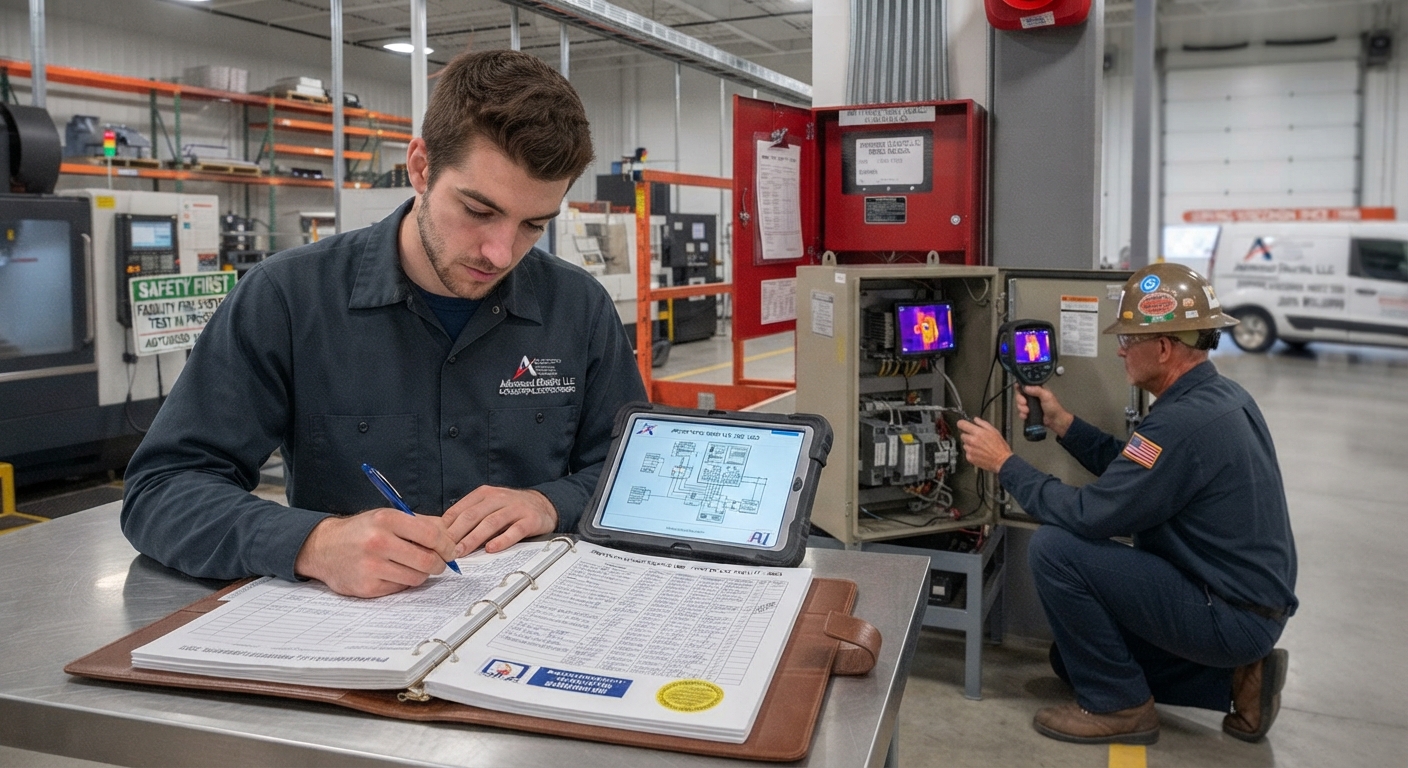
Start with a site assessment from a licensed electrical contractor experienced in industrial fire alarm systems, covering your current system’s condition, testing history, and whether its design still matches your facility’s layout and equipment. Advanced Electric LLC offers free site assessments for Wisconsin manufacturing facilities.
A proper assessment will flag both immediate compliance gaps and longer-term concerns, like a system that was designed for a facility layout that has since changed through renovation or equipment additions.
The assessment also gives facility managers a documented baseline to hand off to insurance carriers or fire inspectors on request, which is often the single most useful outcome of the process beyond the physical work itself.
Get Your Fire Alarm System Reviewed
Fire alarm compliance in a manufacturing facility is not a box to check once and forget. It is an ongoing schedule of inspection and testing, tied directly to code requirements, insurance coverage, and, most importantly, the safety of everyone working in the facility.
Advanced Electric LLC installs, upgrades, and services fire alarm and life safety systems for industrial and manufacturing clients across Fond du Lac and Wisconsin, with over 60 years of combined team experience since 1998.
Call (920) 921-2499 or request a free site assessment to review your facility’s current fire alarm compliance status.
Frequently Asked Questions
What code governs fire alarm systems in Wisconsin manufacturing facilities?
NFPA 72, the National Fire Alarm and Signaling Code, governs design, installation, testing, and maintenance requirements, in combination with local fire code adoption and any specific requirements from your insurance carrier.
How often does our fire alarm system need a full inspection?
Systems connected to a monitoring or supervising station typically need an annual full inspection and test, with more frequent checks of certain components on a monthly or quarterly basis depending on system configuration.
Can Advanced Electric LLC service a fire alarm system we didn’t originally install?
Yes. We evaluate and service existing fire alarm systems regardless of the original installer, and can recommend upgrades if the current system no longer matches your facility’s layout or equipment.
Does a fire alarm system need to be updated after we add new equipment or renovate?
Often yes. New equipment, walls, or storage layouts can change detection coverage and notification needs, which is why a system evaluation after any significant facility change is worth scheduling.
Does Advanced Electric LLC handle both fire alarm and security system installation?
Yes. We install and service both fire alarm and security systems for commercial and industrial clients, which allows facilities to coordinate related life safety and security projects with one contractor.
Advanced Electric LLC has served Fond du Lac and surrounding Wisconsin communities since 1998, with over 60 years of combined team experience and a safety-first, Clean Wiring approach on every job.
Call (920) 921-2499 or request a free estimate today.
213 W 9th St, Fond du Lac, WI 54936 | Mon through Fri, 9:00 AM to 3:00 PM