TL;DR: Frequent breaker trips, voltage drops when large equipment starts, warm panel enclosures, and a panel that predates your current production equipment are all signs an industrial facility needs a panel upgrade. Undersized panels cause downtime and equipment wear long before they cause visible failures. Advanced Electric LLC offers free industrial site assessments across Wisconsin. Call (920) 921-2499.
Signs your industrial facility needs a panel upgrade tend to show up as small operational annoyances long before they show up as a real failure. A breaker trips more often than it used to. Lights dim slightly when a large motor starts. A panel enclosure feels warmer than it should. None of these stop production on their own, so they get noted and moved past, month after month.
The problem is that industrial panels do not fail gracefully. A panel that has been quietly undersized or aging for years tends to become a real problem at the worst possible time, often during a production run or right after new equipment goes in. Catching the early signs is what keeps a panel upgrade a planned project instead of an emergency one.
This guide covers the specific warning signs to watch for in a manufacturing or industrial facility, what causes them, and how to plan an upgrade around production instead of around a breakdown.
Why Industrial Panels Wear Out Faster Than People Expect
An industrial panel does more work than a typical commercial or residential panel. It handles higher current, more frequent switching from large motors starting and stopping, and often years of continuous, near-capacity operation. That combination wears down breaker contacts, bus bars, and connections faster than the panel’s age alone would suggest.
Facilities also change more than their electrical systems do. Production lines get reconfigured, new equipment gets added, and square footage gets repurposed, often without a matching update to the panel that has to support all of it. A panel that was correctly sized when it was installed can become undersized years later without anyone deciding to make it so.
This is why panel age is a useful signal, but not the only one. A ten-year-old panel supporting twice the equipment it was designed for can be in worse shape, functionally, than a twenty-year-old panel that has never been pushed past its original load.
What Are the Warning Signs of an Undersized Industrial Panel?
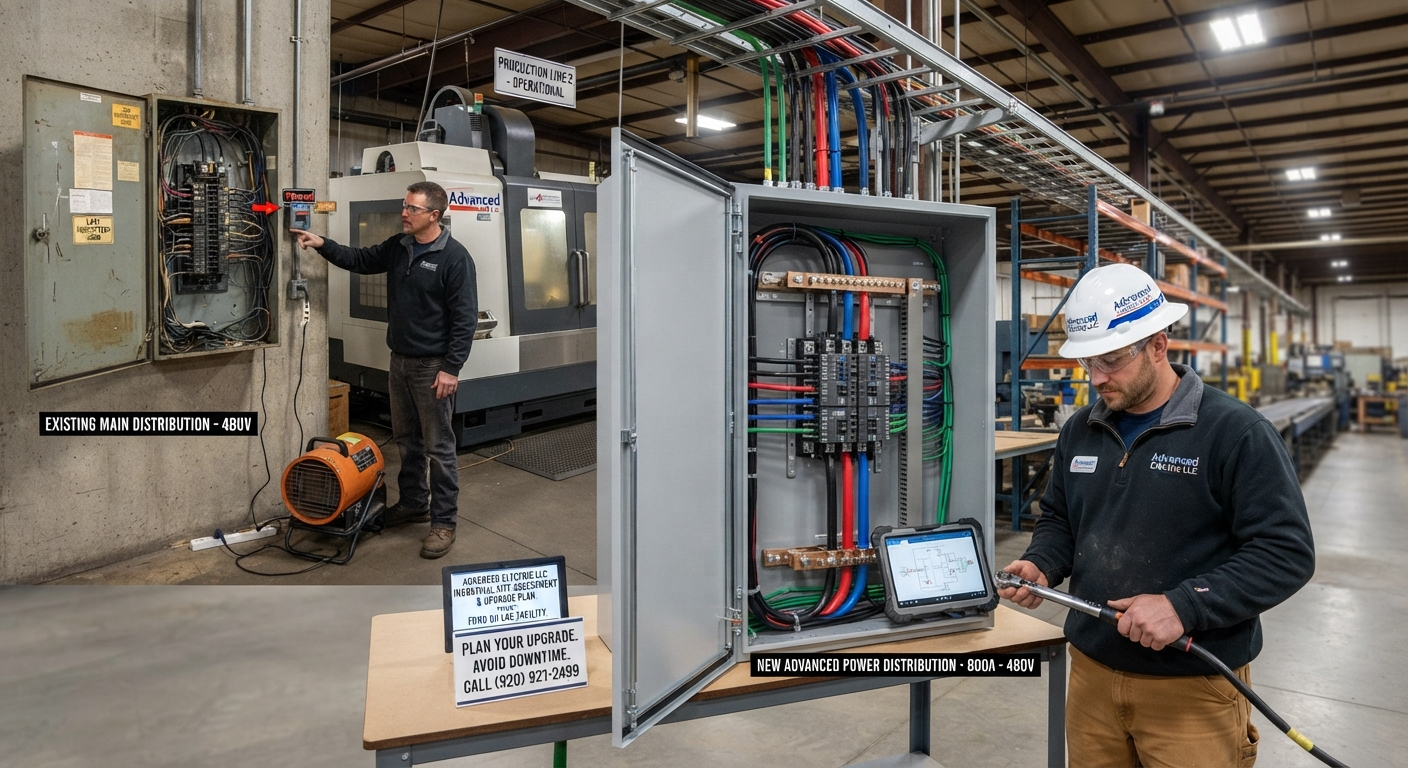
Frequent breaker trips, voltage drops or flickering lights when large equipment starts, warm panel enclosures, buzzing or humming sounds, and a panel that has not been updated since major equipment additions are all warning signs of an undersized or aging industrial panel.
Frequent breaker trips, especially ones tied to specific equipment or specific times of day, usually mean a circuit is being asked to carry more than it was designed for.
Voltage drops when large motors start show up as dimming lights or equipment that briefly stutters. This is a sign the panel is struggling to deliver enough power during the high current draw of a motor’s startup.
Warm panel enclosures mean resistance somewhere in the system, which is never a normal or safe condition. This is one of the faster-moving warning signs and deserves a prompt inspection.
Buzzing or humming from the panel points to loose connections or components under stress, the electrical equivalent of a part that is about to fail.
A panel that predates your current equipment mix is a structural warning sign on its own, even without any of the symptoms above. If your facility has added significant equipment since the panel was last evaluated, it is worth a proactive load calculation rather than waiting for a symptom to appear.
How Much Downtime Does an Emergency Panel Failure Actually Cost?
The direct repair cost of an emergency panel failure is often the smallest part of the expense. The larger cost is unplanned production downtime, which for most manufacturing facilities runs well beyond what a planned upgrade, scheduled around production, would have cost.
An emergency panel failure does not wait for a convenient time. It happens mid-shift, mid-production-run, whenever the panel finally gives out under load, and it typically takes longer to diagnose and repair under emergency conditions than a planned upgrade would take under normal working conditions.
This is the core argument for catching the warning signs early. A planned panel upgrade can be scheduled around a maintenance window or a planned shutdown. An emergency failure cannot be scheduled at all.
What a Load Calculation Actually Tells You
A load calculation is a detailed accounting of every piece of equipment on a panel, its actual draw under normal operation, and its draw during startup, compared against the panel’s rated capacity. It is the only reliable way to know whether a panel has real headroom or is already running close to its limit.
This is different from simply checking the panel’s amperage rating against a rule of thumb. Two facilities with identically rated panels can be in very different situations depending on what is actually plugged into them and how those loads behave during startup versus steady operation.
A proper load calculation also accounts for future growth, not just current equipment. If your facility is planning to add production capacity in the next few years, that plan should factor into the sizing decision made today, since a panel upgrade is not something most facilities want to repeat every few years.
The calculation also documents your facility’s electrical system in a way that pays off long after the upgrade itself. A clearly recorded load profile makes future equipment decisions faster, since the next expansion question can be answered by checking existing records instead of starting the assessment over from scratch.
How Long Does an Industrial Panel Upgrade Take?
Timeline varies by facility size and scope, but most industrial panel upgrades are planned around a scheduled maintenance window or production shutdown, often completed within one to a few days once the project is scoped and materials are on hand. Planning ahead is what keeps this timeline predictable.
The planning phase, including the load calculation, design, and any necessary utility coordination, typically takes longer than the physical installation itself. This is exactly why catching warning signs early matters: it gives a facility time to plan the project properly instead of compressing that planning into an emergency timeline.
Planning an Upgrade Around Production, Not Around a Failure
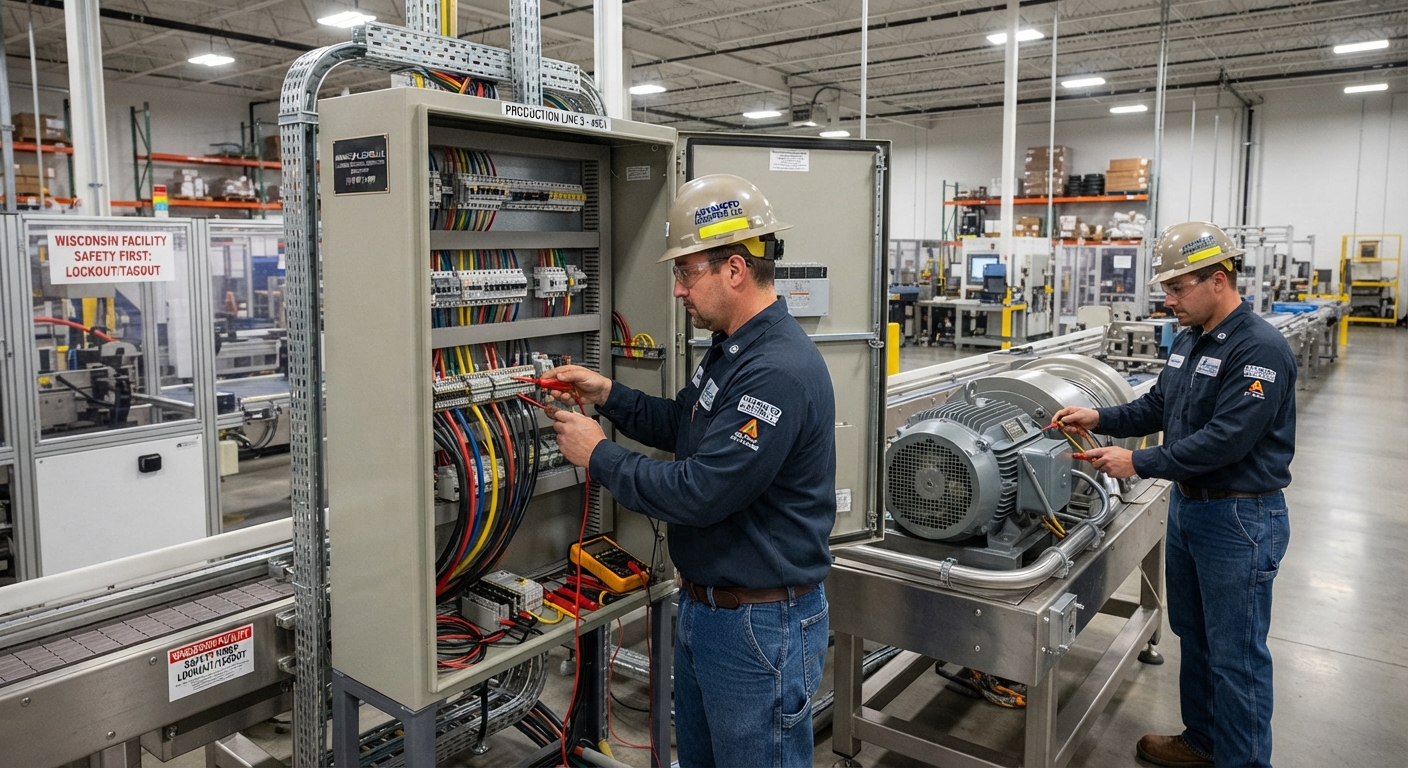
The facilities that handle panel upgrades most smoothly are the ones that treat early warning signs as a planning trigger, not a wait-and-see situation. A short conversation with an electrical contractor after noticing one or two of the signs above costs nothing and can prevent a much more expensive emergency later.
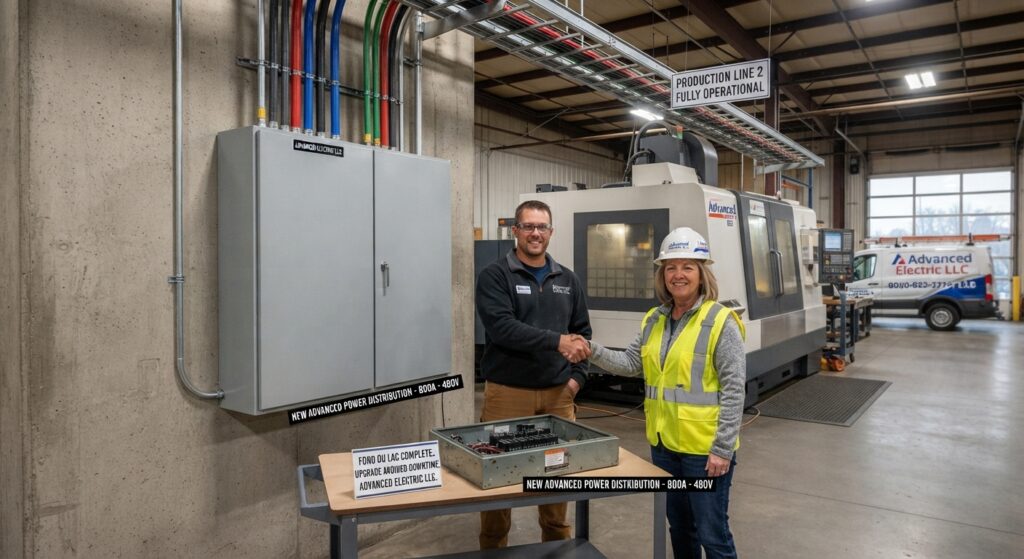
Advanced Electric LLC works with Wisconsin manufacturers to schedule panel upgrades around production needs, minimizing downtime by planning the work in advance rather than responding to a failure after the fact.
If any of these signs sound familiar at your facility, a free site assessment is the fastest way to know where you actually stand, rather than guessing based on panel age or a rule of thumb.
It is also worth involving your maintenance or facilities team in that first conversation. They are usually the ones who notice the small warning signs first, long before a symptom is significant enough to reach a plant manager’s desk, and their day-to-day observations often shape the scope of the eventual project.
Get a Free Industrial Site Assessment
Industrial panels rarely fail without warning. The signs are usually there for months before a real problem forces the issue: frequent trips, voltage drops, warm enclosures, or a panel that has not kept pace with equipment added over the years.
Advanced Electric LLC has provided industrial panel upgrades and electrical layout design for manufacturing facilities across Fond du Lac and Wisconsin since 1998, with over 60 years of combined team experience.
Call (920) 921-2499 or request a free industrial site assessment before a planning problem becomes a production problem.
Frequently Asked Questions
How do I know if my facility’s panel is actually undersized versus just old?
The only reliable way to know is a load calculation performed by a licensed electrician, comparing your panel’s actual current draw and startup demand against its rated capacity. Age alone is not a complete answer either way.
Can a panel upgrade be scheduled around our production calendar?
Yes. Advanced Electric LLC works with facility managers to plan panel upgrades around maintenance windows or planned shutdowns, which minimizes disruption compared to responding to an unplanned failure.
What happens during a load calculation and site assessment?
An electrician reviews the panel’s rated capacity, catalogs the equipment currently connected to it, and calculates both steady-state and startup current demand to determine whether the panel has adequate headroom for current and planned future use.
Is a panel upgrade required before adding new production equipment?
It depends on the equipment’s power requirements and your panel’s existing capacity. This is exactly why a load calculation before purchasing new equipment is worth doing, so the upgrade decision is made with real numbers instead of guesswork.
What Wisconsin areas does Advanced Electric LLC serve for industrial panel upgrades?
We serve manufacturing and industrial facilities in Fond du Lac, Milwaukee, Madison, Oshkosh, and the surrounding Wisconsin communities.
Advanced Electric LLC has served Fond du Lac and surrounding Wisconsin communities since 1998, with over 60 years of combined team experience and a safety-first, Clean Wiring approach on every job.
Call (920) 921-2499 or request a free estimate today.
213 W 9th St, Fond du Lac, WI 54936 | Mon through Fri, 9:00 AM to 3:00 PM