TL;DR: Adding an EV charger to an older home is safe when a licensed electrician confirms your panel has the capacity and installs the circuit to NEC Article 625 standards. Many older Wisconsin homes need a panel upgrade first. The federal 30C tax credit for home chargers expired June 30, 2026. Advanced Electric LLC offers free EV charger estimates. Call (920) 921-2499.
Is it safe to add an EV charger to an older home is one of the most common questions we hear from homeowners in Fond du Lac who just bought an electric vehicle. The short answer is yes, it can be done safely, but older homes often need an extra step that newer homes skip.
A Level 2 home charger draws far more continuous power than a typical outlet. Some older electrical panels, especially those rated 100 amps or below, simply do not have the extra capacity to add one safely without an upgrade, according to the U.S. Department of Energy’s Alternative Fuels Data Center. That is not a reason to skip a charger. It is a reason to have an electrician check first.
This guide covers what an older home needs, what the electrical code requires, and what has changed with federal incentives for home EV charging in 2026.
It is written for homeowners who already own an EV or are close to buying one, and want a straight answer before they call an electrician, not after.
What Makes EV Charging Different From a Regular Outlet?
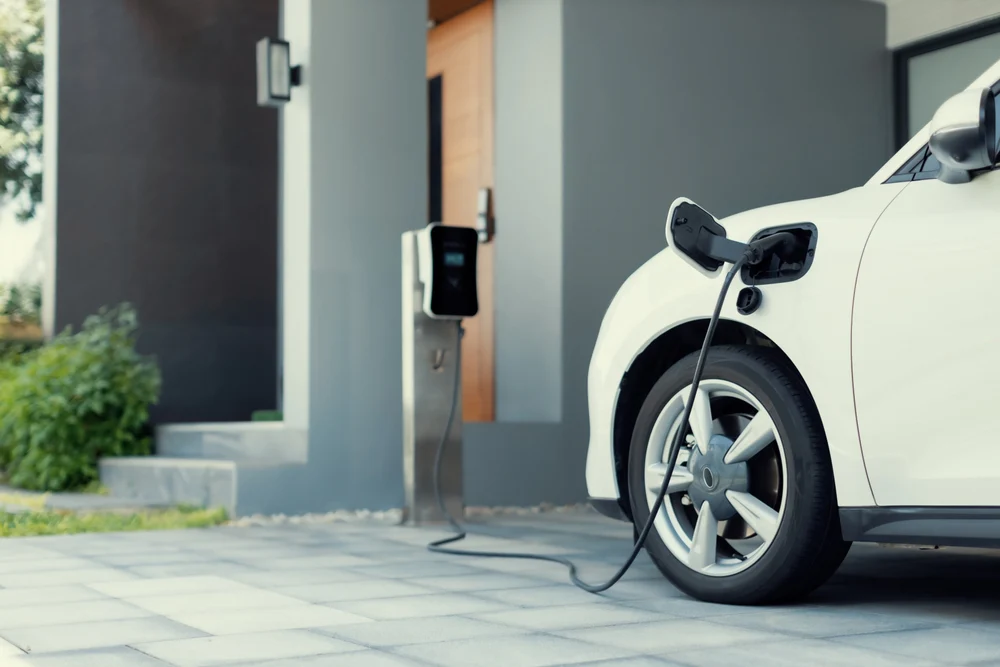
A standard wall outlet is built for short bursts of use, a vacuum, a lamp, a phone charger. An EV charger runs at high power for hours at a stretch, often overnight, which the National Electrical Code treats as a continuous load requiring its own dedicated circuit.
That distinction matters because a continuous load has to be sized with extra safety margin built in, not just enough capacity to handle the charger’s rated draw for a few minutes.
A Level 2 charger typically draws somewhere between 30 and 50 amps on its own circuit, which is more than most single appliances in a home besides an electric range or a central air unit. That is a meaningful new draw for any panel to absorb.
Can My Older Home’s Panel Handle a Level 2 Charger?
It depends on your panel’s current capacity and how much of it is already in use. Some homes have insufficient electrical capacity for Level 2 charging equipment as installed, and a qualified electrician can add circuits or upgrade the panel to accommodate the added load, per the Department of Energy’s home charging guidance.
Many homes built in Fond du Lac before the 1990s were wired for 100 amp service, which was standard at the time but leaves little room for a large new continuous load once you account for a furnace, central air, an electric range, and everyday household use. A load calculation, done by an electrician, is the only reliable way to know for certain.
Homes with 200 amp service, which became more common from the 1990s onward, generally have more headroom for a Level 2 charger without triggering a full panel upgrade. Even then, an electrician still needs to confirm the math rather than assume it based on panel size alone.
What Does NEC Article 625 Require for EV Chargers?
NEC Article 625 governs electric vehicle charging equipment and requires it to be installed on its own dedicated branch circuit, sized for continuous load, with proper overcurrent protection and, in most cases, ground-fault protection. It also requires that a qualified electrician confirm the home’s electrical system can support the added load before installation.
In practical terms, this means a code-compliant EV charger installation is never just plugging in a new outlet. It is a full circuit run from the panel, sized and protected specifically for that load.
Article 625 also covers where the charger can be mounted, clearance requirements around it, and, for some installations, load management equipment that keeps the charger from pulling more power than the panel can safely deliver alongside everything else running in the home.
Is the Federal EV Charger Tax Credit Still Available?
No, not anymore for most homeowners. The federal 30 percent home EV charger tax credit, known as Section 30C, expired for purchases and installations completed after June 30, 2026, according to Rewiring America’s tracker. If you installed a charger before that date in an eligible census tract, you may still be able to claim it using IRS Form 8911 for that tax year.
If you are planning an installation now, budget for the full cost of the charger and installation without assuming a federal credit will offset it. It is still worth checking whether your utility or the state of Wisconsin offers a separate rebate, since those programs change independently of federal tax credits.
A licensed electrician cannot file taxes on your behalf, but a detailed, itemized invoice for the equipment and installation is exactly what you or your accountant would need if you did install before the deadline and plan to claim the credit for that tax year.
What a Professional Installation Looks Like
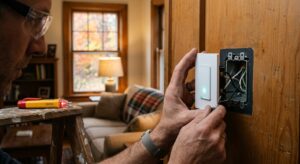
A proper EV charger installation starts with a load calculation to confirm your panel has room for the new circuit. From there, an electrician runs a dedicated circuit from the panel to the charger location, sized to code, with the right breaker and, where required, ground-fault protection.
If the load calculation shows your panel does not have enough capacity, the fix is usually a panel upgrade, not a workaround. A licensed electrician will tell you straight if that is the case rather than installing a charger that overloads the system.
Charger placement matters too. Garage location, distance from the panel, and whether the charger will be mounted indoors or outdoors all affect the materials and labor needed, which is why an in-person walkthrough gives a far more accurate quote than a phone estimate.
Warning Signs Your Panel Needs Upgrading First
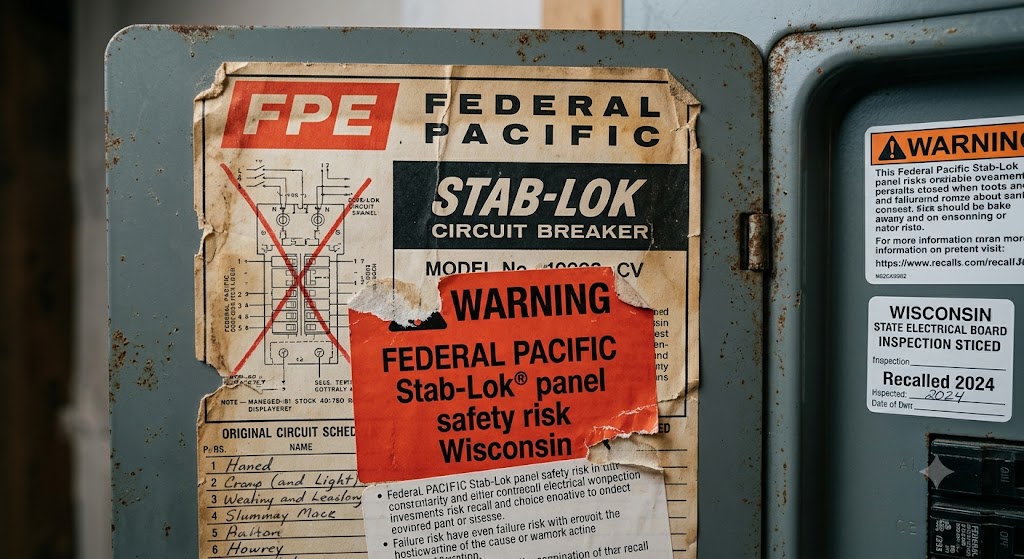
If your panel is over 25 years old, rated below 100 amps, or already trips breakers under normal household use, plan on a panel evaluation before your EV charger installation, not after. Adding a large new load to an already stressed panel is how small problems become real ones.
This is also the moment to mention if you have a Federal Pacific or Zinsco panel, both known for breakers that do not always trip reliably during an overload. An EV charger is exactly the kind of new load that makes that existing risk worse.
If any of this sounds familiar, it is worth reading our companion guide on the signs your electrical panel needs upgrading before scheduling an EV charger installation, so you know what to expect from the visit.
Do I Need a Permit for an EV Charger Installation in Wisconsin?
Yes. EV charger installations are electrical work under Wisconsin’s Uniform Dwelling Code and typically require a permit and inspection through your local municipality, the same as a new circuit or panel upgrade. Advanced Electric LLC handles the permit process as part of every EV charger installation.
Skipping this step is not worth the risk. An uninspected EV charging circuit can complicate an insurance claim or a future home sale in the same way any other unpermitted electrical work can.
Get Your Home Ready for EV Charging
Adding an EV charger to an older home is safe and common, but it starts with an honest look at what your panel can actually support. Some homes are ready today. Others need a panel upgrade first, and it is far better to find that out before installation than after.
Advanced Electric LLC offers free estimates for EV charger installations across Fond du Lac and the surrounding Wisconsin communities we serve, including a straight answer on whether your panel needs an upgrade first.
Every EV charger estimate starts with a load calculation, not a guess. That is the one step that separates a safe, code-compliant installation from one that overloads a panel that was never built to carry it.
Call (920) 921-2499 or request a free estimate to get your home ready for EV charging.
Frequently Asked Questions
How much does it cost to install an EV charger at home?
Cost depends on whether your panel already has capacity or needs an upgrade first. A straightforward dedicated circuit runs less than a project that also requires a panel upgrade, which is why a free, in-person estimate gives a more accurate number than a general online range.
Can I plug a Level 2 charger into a regular outlet?
No. Level 2 chargers require a dedicated 240-volt circuit installed by a licensed electrician, sized and protected specifically for that continuous load under NEC Article 625. Standard outlets are not built for this kind of sustained draw.
How long does an EV charger installation take?
A straightforward installation, where the panel already has capacity, typically takes a few hours. If a panel upgrade is needed first, plan on that being a separate, slightly longer step.
Do I need a permit for a Level 1 charger that plugs into a regular outlet?
Level 1 charging through an existing, properly rated outlet generally does not require new electrical work. Most homeowners who want faster charging move to a Level 2 setup, which does require a permitted dedicated circuit.
Is my home a good candidate for an EV charger without a panel upgrade?
Homes with 200 amp service and moderate existing electrical use are often good candidates without an upgrade. The only reliable way to know is a load calculation from a licensed electrician, which Advanced Electric LLC includes as part of a free EV charger estimate.
Advanced Electric LLC has served Fond du Lac and surrounding Wisconsin communities since 1998, with over 60 years of combined team experience and a safety-first, Clean Wiring approach on every job.
Call (920) 921-2499 or request a free estimate today.
213 W 9th St, Fond du Lac, WI 54936 | Mon through Fri, 9:00 AM to 3:00 PM
Related reading: Learn more about EV charger installation in Fond du Lac.