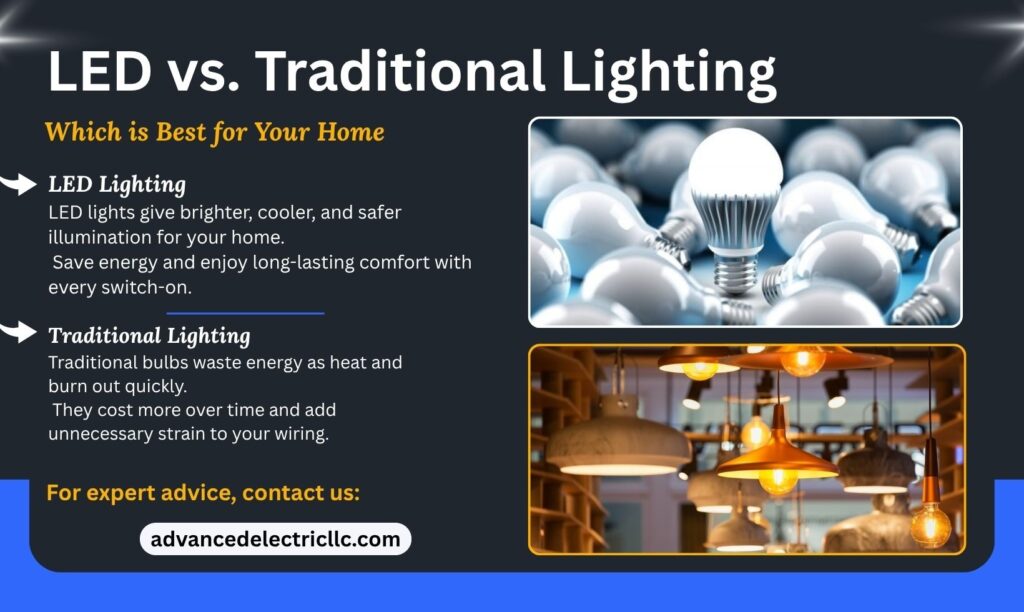
For Fond du Lac homeowners, lighting has become much more than simply brightening a room. Today, your lighting choices directly affect your energy bills, comfort, home safety, and even property value. As homeowners search for smarter and more energy-efficient solutions, the debate around LED vs Traditional Lighting continues to grow.
At AdvancedElectricLLC.com, we’ve helped homeowners and businesses across Wisconsin upgrade outdated lighting systems with safer, modern, and energy-saving solutions. Whether you are remodeling your home, reducing electricity costs, or improving indoor comfort, understanding the difference between bold LED lighting and traditional bulbs can help you make the right investment.
This complete guide explains everything you need to know about LED lighting upgrades for Madison homes, energy savings, lifespan, installation costs, smart home compatibility, and why LEDs have become the preferred lighting solution for modern homes.
Understanding LED and Traditional Lighting
Before comparing performance, it’s important to understand how both technologies work.
What Is LED Lighting?
LED lighting stands for Light Emitting Diode technology. Unlike traditional bulbs that use heat to produce light, LEDs use semiconductors to convert electricity directly into illumination. This process wastes very little energy, making LEDs one of the most energy-efficient lighting solutions available today.
Key Features of LED Lighting
- Energy efficiency: Uses up to 80 to 90% less energy compared to traditional bulbs, according to ENERGY STAR, helping reduce electricity bills and overall power consumption.
- Heat emission: Produces minimal heat, making it safer for long-term indoor use and reducing cooling load.
- Long lifespan: LED is a highly energy-efficient lighting solution with a lifespan of 15,000 to 50,000 hours according to the U.S. Department of Energy, which reduces frequent replacements and maintenance costs.
- Instant brightness: Provides full brightness immediately when switched on without any warm-up delay.
- Smart compatibility: Works with smart home systems, allowing control through apps, sensors, and automation setups.
- Durability: Built with shock-resistant and strong materials, making it reliable for both residential and commercial environments.
- Color options: Available in multiple color temperatures ranging from warm white to cool daylight for different lighting preferences.
Because of these advantages, LED lighting benefits have made LEDs the preferred choice for modern homes and businesses.
What Is Traditional Lighting?
Traditional lighting includes older lighting technologies such as incandescent bulbs, halogen bulbs, and CFLs.
Incandescent Bulbs
Incandescent bulbs create light by heating a tungsten filament inside the bulb. While they provide warm lighting, they are highly inefficient because most of the electricity becomes heat instead of light.
Halogen Bulbs
Halogen lights are slightly more efficient than incandescent bulbs but still consume significantly more electricity compared to LEDs.
CFL Bulbs
Compact Fluorescent Lamps (CFLs) are more efficient than incandescent bulbs but contain mercury, making disposal more complicated and environmentally concerning.
LED vs Traditional Lighting Comparison
Feature |
LED Lighting |
Traditional Lighting |
|
Energy Efficiency |
Very High |
Low |
|
Lifespan |
25,000–50,000 Hours |
1,000–4,000 Hours |
|
Heat Output |
Very Low |
Very High |
|
Maintenance |
Minimal |
Frequent |
|
Upfront Cost |
Higher |
Lower |
|
Long-Term Savings |
Excellent |
Poor |
|
Environmental Impact |
Eco-Friendly |
Less Efficient |
|
Smart Home Compatibility |
Yes |
Limited |
Why LED Lighting Is More Energy Efficient
One of the biggest reasons homeowners switch to energy-efficient LED lighting is reduced electricity consumption.
Traditional bulbs waste most of their electricity as heat. LEDs, on the other hand, use electricity more effectively to produce bright illumination without generating excessive heat.
Real-World Energy Comparison
Bulb Type |
Power Usage |
|
Traditional Incandescent |
60 Watts |
|
Equivalent LED |
8–10 Watts |
This means LEDs use up to 80–90% less electricity while producing the same brightness.
For households with multiple light fixtures, this difference can dramatically reduce electricity bills over time.
How Much Money Can LED Lights Save?
Many homeowners ask if LEDs are really worth the investment. The answer is yes.
Example of Yearly Savings
Example of Yearly Savings: Imagine a home with 20 light bulbs used for 5 hours daily.
This simple usage shows how quickly energy savings add up over time with efficient lighting.
Traditional Lighting
High electricity usage, frequent bulb replacements, and increased cooling costs due to heat can significantly raise overall energy expenses.These issues also reduce efficiency and make lighting systems more costly to maintain over time.
LED Lighting
Lower energy bills, minimal maintenance, and reduced strain on air conditioning systems make energy-efficient lighting a cost-effective choice.
These benefits help improve overall home efficiency while reducing long-term electricity expenses.
A full-home LED lighting upgrade can save homeowners hundreds of dollars every year.
Over several years, the savings become even more significant.
LED Lighting Lifespan Compared to Traditional Bulbs
Another major reason why LEDs outperform traditional lighting is lifespan.
Lighting Type |
Average Lifespan |
|
Incandescent |
1,000 Hours |
|
Halogen |
2,000–4,000 Hours |
|
CFL |
8,000–10,000 Hours |
|
LED |
25,000–50,000+ Hours |
A single LED bulb can last years longer than traditional bulbs.
This reduces maintenance costs, replacement frequency, ladder use for hard-to-reach fixtures, and unnecessary waste sent to landfills.
It also improves convenience while supporting a more efficient and environmentally friendly lighting system.
For busy homeowners, long-lasting LED lighting offers major convenience and cost savings.
Heat Output and Home Safety
Traditional bulbs produce large amounts of heat. In fact, incandescent bulbs waste around 90% of their energy as heat instead of light.
This creates several problems:
- Hot rooms: Poor airflow and heat buildup can make indoor spaces uncomfortable, especially during warmer seasons.
- Higher cooling costs: Overworked cooling systems use more electricity, leading to increased monthly energy bills.
- Fire hazards: Excess heat and overloaded electrical components can increase the risk of electrical fires, a leading cause of home fires tracked by the National Fire Protection Association.
- Stress on electrical systems: Continuous high temperatures can strain wiring, breakers, and appliances, reducing overall system efficiency.
LED bulbs remain cool during operation, making them much safer.
Benefits of Low-Heat LEDs
LED lighting helps reduce fire risks because it produces far less heat than traditional bulbs, making it safer for everyday use. It is also better suited for enclosed fixtures where excess heat can become a problem. By generating minimal heat, LED lights improve indoor comfort and help lower cooling costs during warmer months. Their cooler surface temperature also makes them safer around children and pets.
For Wisconsin homeowners dealing with seasonal weather changes, efficient lighting can also help maintain indoor comfort year-round.
Smart LED Lighting for Modern Homes
Another reason smart LED lighting systems are becoming popular is convenience and automation.
Modern LEDs can connect with:
Alexa, Google Home, smart switches, and mobile apps allow homeowners to control lighting systems more conveniently and efficiently through voice commands and remote access.
Smart LED Features
Voice control, dimming options, motion sensors, scheduling features, energy monitoring, and color-changing settings help homeowners customize lighting for better convenience, efficiency, and smart home automation.
Traditional lighting systems cannot compete with modern smart home lighting technology.
LED Lighting Quality Has Improved
Years ago, some people believed LED lights looked harsh or too bright. Modern LEDs have solved this issue completely.
Today’s LEDs offer multiple color temperatures and improved Color Rendering Index (CRI).
Color Temperature |
Best Use |
|
2700K Warm White |
Living Rooms & Bedrooms |
|
3000K Neutral White |
Kitchens |
|
4000K–5000K Cool White |
Offices & Task Areas |
Modern LEDs can now match or even exceed the appearance of traditional lighting.
Environmental Benefits of LED Lighting
One of the biggest advantages of eco-friendly LED lighting is sustainability.
LEDs:
- Consume less electricity: LED lighting uses significantly less power than traditional bulbs, helping lower energy consumption and utility costs.
- Reduce carbon emissions: Lower electricity usage helps decrease environmental impact and supports more energy-efficient homes.
- Last significantly longer: LEDs have a much longer lifespan, reducing the need for frequent bulb replacements.
- Produce less waste: Longer-lasting lighting solutions help minimize landfill waste and discarded materials.
- Contain no mercury: Unlike some traditional lighting options, LEDs do not contain harmful mercury, making them safer and more environmentally friendly.
Because LEDs last much longer than traditional bulbs, fewer bulbs end up in landfills.
Governments and energy organizations worldwide continue encouraging homeowners to switch to LED lighting for environmental reasons.
Best Rooms for LED Lighting
LED lighting works well in nearly every area of a home.
Indoor Spaces
Living rooms, kitchens, bathrooms, bedrooms, basements, and home offices are some of the most common areas where modern LED lighting solutions are installed for better efficiency and comfort.
Outdoor Applications
- Security lighting: Helps improve home safety by increasing visibility around entry points, driveways, and outdoor areas.
- Landscape lighting: Enhances the appearance of gardens, pathways, and outdoor features while improving nighttime visibility.
- Garage lighting: Provides brighter and more reliable illumination for safer parking, storage, and workspace use.
- Motion sensor lighting: Automatically activates when movement is detected, improving convenience, security, and energy efficiency.
Specialty Applications
Under-cabinet lighting improves task visibility in kitchens, recessed lighting provides clean modern illumination, decorative fixtures add style, and smart ambient lighting offers adjustable brightness and colors through smart control.
Because LEDs are available in many styles and brightness levels, homeowners have more flexibility when designing lighting systems.
Common Mistakes Homeowners Make with LED Lighting
Even though LEDs are simple to use, homeowners still make common mistakes.
Buying Cheap LEDs
Low-quality bulbs may flicker, fail early, or provide inconsistent lighting.
Choosing the Wrong Color Temperature
Warm lighting is best for relaxing spaces, while cool lighting works better in kitchens and offices.
Ignoring Dimmer Compatibility
Older dimmer switches may need upgrading to work correctly with LEDs.
Replacing Only a Few Bulbs
Whole-home LED upgrades create more consistent lighting and maximize savings.
Wisconsin Energy Costs and Local Incentives
Wisconsin winters push heating and lighting costs higher for months at a time. Every fixture that pulls less power adds up across a whole heating season.
Wisconsin homeowners can also check current rebates and offers through Focus on Energy, the state’s official energy efficiency program. Focus on Energy periodically offers incentives on efficient lighting and other home upgrades, so it is worth a quick check before you buy.
Pairing an LED upgrade with a professional electrical inspection also catches other issues, like an aging panel or worn wiring, before they turn into a bigger repair bill.
Are LED Lights Worth It?
Absolutely.
When comparing LED lighting for Oshkosh homes or other traditional lighting options, LEDs clearly outperform in almost every category.
Benefits of LED Lighting
- Lower energy bills
- Longer lifespan
- Reduced maintenance
- Better safety
- Smart home compatibility
- Improved lighting quality
- Lower environmental impact
Traditional bulbs only offer one advantage: lower upfront pricing.
However, over time, LEDs save far more money through reduced electricity usage and fewer replacements.
Why Wisconsin Homeowners Are Switching to LED Lighting
Homeowners across Wisconsin are increasingly investing in residential LED lighting upgrades because they reduce long-term energy costs and improve indoor comfort.
Benefits include:
- Better energy efficiency during winter
- Reduced cooling strain in summer
- Improved visibility
- Increased home value
- Lower maintenance needs
At AdvancedElectricLLC.com, we’ve helped many homeowners modernize outdated lighting systems with safe and energy-efficient LED installations.
Why Choose Advanced Electric LLC?
We provide professional lighting installation and electrical services across Fond du Lac and surrounding Wisconsin communities.
- Residential LED upgrades
- Commercial lighting retrofits
- Smart lighting systems
- Outdoor lighting installation
- Electrical inspections
- Energy-efficient lighting solutions
We help homeowners select the right lighting systems based on safety, comfort, efficiency, and long-term performance.
Whether you’re upgrading a single room or replacing every fixture in your home, our professional solutions are designed for modern living.
Final Thoughts
The comparison between LED vs Traditional Lighting is no longer close. LEDs clearly outperform traditional lighting technologies in energy efficiency, lifespan, maintenance, safety, and long-term cost savings.
While traditional bulbs may seem cheaper initially, they cost significantly more over time due to high electricity usage and frequent replacements.
Modern LED technology provides:
- Better energy efficiency
- Lower utility bills
- Improved home comfort
- Safer operation
- Smart home integration
- Better environmental sustainability
Switching to LED lighting helps homeowners lower monthly costs while improving lighting quality. We provide Wisconsin homeowners with safe, efficient, and professionally installed lighting solutions for long-term savings and performance.
Ready to upgrade your lighting? Contact us today for professional LED lighting solutions and expert installation services in Wisconsin.
FAQs
Q1. Do LED lights really save money?
Ans: Yes. LEDs use significantly less electricity and last much longer than traditional bulbs.
Q2. Are LED lights safer than incandescent bulbs?
Ans: Yes. LEDs produce very little heat, reducing fire risks and overheating issues.
Q3. Can LED bulbs work with dimmer switches?
Ans: Yes, but you may need LED-compatible dimmers for proper performance.
Q4. What is the best LED color temperature for homes?
Ans: 2700K–3000K works best for relaxing spaces, while cooler temperatures are ideal for task lighting.
Q5. Are LED lights environmentally friendly?
Ans: Yes. LEDs reduce electricity usage, waste, and carbon emissions while containing no mercury.
Related reading: Learn more about Christmas light installation in Fond du Lac, energy efficient lighting in Wisconsin, and landscape lighting in Fond du Lac.