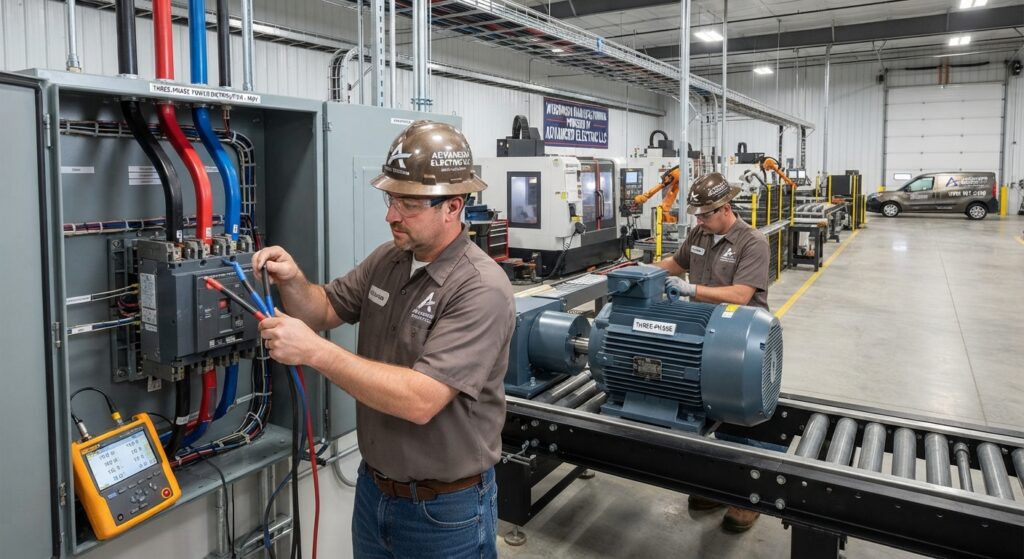
TL;DR: Three-phase power delivers smoother, more efficient energy than single-phase power, which is why nearly all industrial motors and heavy equipment run on it. Wisconsin manufacturers need to confirm their facility has adequate three-phase service before adding new equipment, since undersized service is a common cause of unplanned downtime. Advanced Electric LLC designs and installs three-phase systems for facilities across Wisconsin. Call (920) 921-2499.
Three-phase power explained simply: it is the type of electrical service that runs almost every piece of heavy equipment in a manufacturing plant, from conveyor motors to compressors to CNC machines. If you manage a Wisconsin facility and someone mentions “three-phase capacity” during an equipment purchase, it is worth understanding what that actually means for your electrical system.
Most homes run on single-phase power, which is enough for lights, outlets, and small appliances. Industrial equipment needs something different. Three-phase power delivers a constant, smoother flow of energy that lets large motors start and run efficiently without the strain single-phase power would put on the same equipment.
This guide covers what three-phase power actually is, why it matters for manufacturing equipment, and the questions a Wisconsin facility should ask before adding new three-phase loads.
What Is Three-Phase Power?
Three-phase power delivers electricity through three separate alternating currents, offset from each other, which combine to produce a constant and smooth flow of energy rather than the pulsing delivery of single-phase power. This makes it far more efficient for running large motors and heavy industrial equipment.
Single-phase power, the kind used in most homes, delivers energy in a single wave that rises and falls, meaning the power flow briefly drops toward zero many times per second. For a lamp or a laptop charger, that does not matter. For a large motor, it means uneven torque and more strain on the equipment.
Three-phase power staggers three separate waveforms so that as one dips, another is rising, keeping the total power delivery essentially constant. According to the U.S. Department of Energy’s guidance on industrial motor systems, this design avoids the torque pulsations that single-phase motors experience, producing constant, smooth torque and eliminating the need for special starting windings that single-phase motors require (per the DOE’s motor systems fact sheet).
Why Manufacturing Equipment Runs on Three-Phase Power
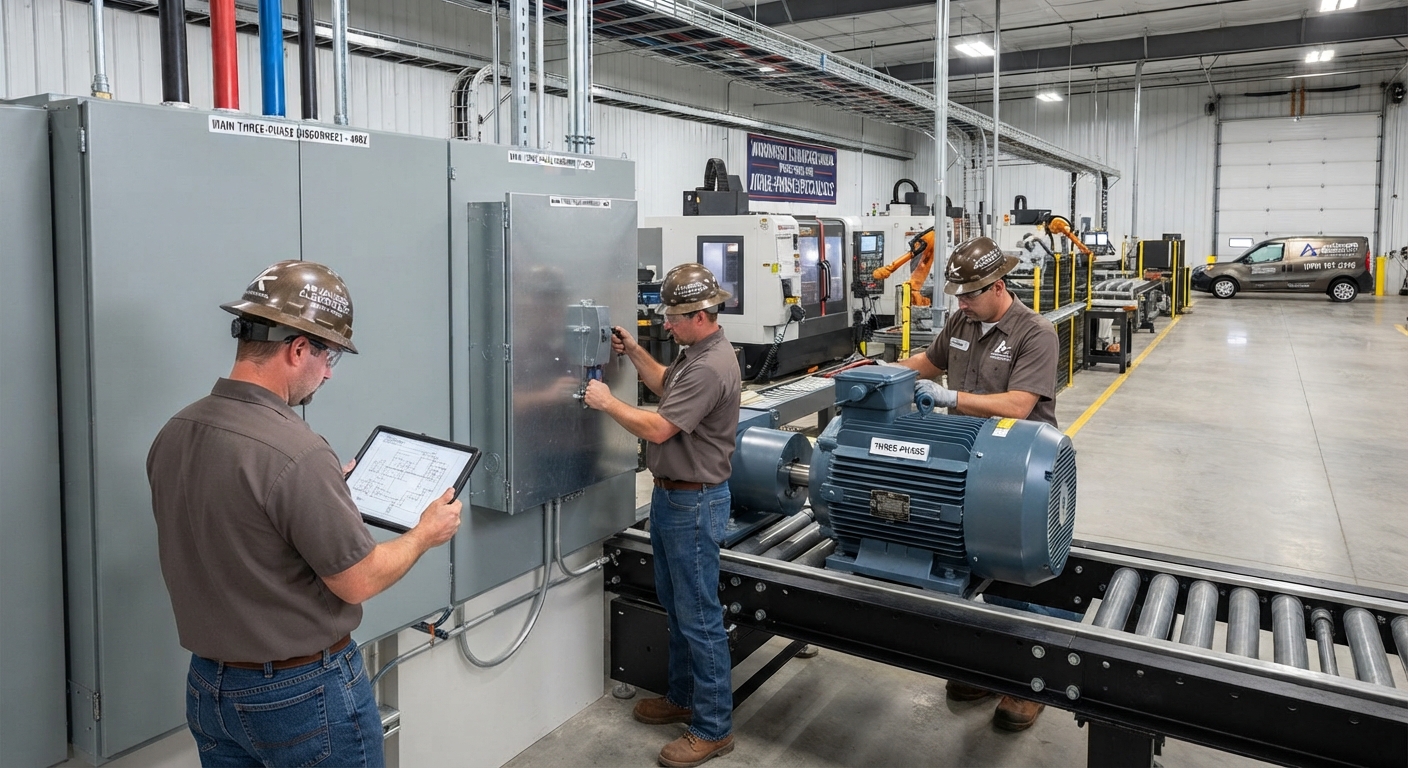
Nearly all industrial motors above a few horsepower are designed for three-phase power because it starts and runs equipment more efficiently, with less mechanical stress and lower operating costs over the equipment’s lifetime. Compressors, conveyor systems, CNC machines, and large HVAC units in commercial and industrial buildings almost universally specify three-phase service.
The efficiency difference adds up. A motor running smoothly on properly sized three-phase power draws less current for the same output than one straining against uneven single-phase delivery, which shows up directly on a facility’s electric bill over time.
This is also why equipment vendors specify three-phase requirements up front. Buying a piece of production equipment without confirming your facility’s electrical service can handle it is one of the more common and expensive planning mistakes we see in industrial projects.
How Do I Know If My Facility Has Enough Three-Phase Capacity?
The only reliable way to know is a load calculation performed by a licensed electrician familiar with industrial systems, reviewing your facility’s existing service size, current equipment draw, and the requirements of any new equipment you plan to add. Guessing based on panel size alone is not accurate enough for industrial planning.
Many older industrial buildings in Wisconsin were wired decades ago, for a different mix of equipment than what is running on the floor today. Facilities that have added production lines, upgraded machinery, or expanded square footage over the years may be closer to their service’s real limit than anyone realizes.
A proper load calculation accounts for every motor and piece of equipment on the system, not just the newest addition, since the real question is always what the total combined draw looks like, not whether one new machine fits on paper.
What Happens If a Facility’s Three-Phase Service Is Undersized?
Undersized three-phase service can cause voltage drops, motors that run hot or fail prematurely, nuisance breaker trips, and unplanned downtime, especially when multiple large motors start at once. In some cases it can also damage sensitive equipment or trigger warranty issues with newly purchased machinery.
Voltage drop is one of the more common and least visible symptoms. When a facility’s service cannot fully supply the load, voltage sags under demand, motors work harder to compensate, and both energy costs and equipment wear increase over time, often without an obvious single point of failure to blame.
This is part of why a facility that has been running fine for years can suddenly develop electrical problems after adding one new piece of equipment. The new load did not create the underlying capacity issue. It simply pushed an already-tight system past its limit.

Planning for New Equipment Before It Arrives
The best time to check three-phase capacity is before a new machine is ordered, not after it arrives and will not run correctly. A quick conversation with an electrical contractor during the equipment evaluation stage can prevent a costly installation delay later.
This is especially true for equipment with high starting current, like large compressors or motors that draw a heavy inrush of power the moment they switch on. A facility’s service needs to be sized not just for steady-state operation, but for that startup surge as well.
Advanced Electric LLC works with Wisconsin manufacturers during the planning stage of equipment purchases, confirming service capacity and designing the connection before installation day, which avoids the scramble of discovering a capacity problem after new machinery is already on the floor.
This planning conversation is also the right time to think ahead, not just about the machine being purchased today. Facilities that expect to add capacity over the next few years often benefit from sizing a new service or panel with some margin built in, rather than repeating a smaller upgrade project every time a new piece of equipment arrives.
Can an Existing Facility Be Upgraded to Support More Three-Phase Load?
Yes. Most facilities can be upgraded with a larger service entrance, additional or upgraded panels, and properly sized feeder wiring to support new three-phase equipment. The scope depends on how much additional capacity is needed and the condition of the existing electrical infrastructure.
An upgrade project typically starts with the same load calculation used to diagnose a capacity problem, then moves into a design phase covering panel placement, wiring routes, and any utility coordination needed for a larger service. Advanced Electric LLC handles this process end to end for industrial clients, including industrial panel upgrades and full electrical layout and design work.
In some cases, the utility’s own service to the building also needs to be evaluated, not just the internal panel. A facility drawing significantly more power than it did when the original service was installed may need to coordinate with the utility on a larger service entrance, which is a longer-lead-time item worth identifying early in the planning process rather than discovering midway through a project.
Plan Your Facility’s Power Before Equipment Arrives
Three-phase power is what keeps manufacturing equipment running efficiently, but only when a facility’s electrical service is properly sized for the load it actually carries. Guessing is how unplanned downtime happens.
Advanced Electric LLC provides load calculations, three-phase wiring, motor connections, and full industrial panel upgrades for manufacturing facilities across Fond du Lac and Wisconsin, backed by over 60 years of combined team experience since 1998.
Call (920) 921-2499 or request a free site assessment before your next equipment purchase, not after.
Frequently Asked Questions
What is the difference between single-phase and three-phase power?
Single-phase power delivers electricity in one pulsing waveform, common in homes and small offices. Three-phase power uses three offset waveforms that combine into a constant, smoother flow, which is why it is standard for industrial motors and heavy equipment.
Does every industrial facility need three-phase power?
Most manufacturing facilities with motors above a few horsepower need three-phase power for efficient operation. Smaller shops with only light equipment may run on single-phase service, but this should be confirmed with a load calculation rather than assumed.
How much does it cost to add three-phase service to a facility?
Cost depends on how much new capacity is needed, the distance from the utility connection, and whether panel or feeder upgrades are required. A site assessment gives an accurate, project-specific number rather than a general estimate.
Can Advanced Electric LLC assess capacity before we purchase new equipment?
Yes. We recommend a load calculation and site assessment during the equipment evaluation stage, before a purchase is finalized, to confirm your facility can support the new load without surprises during installation.
What Wisconsin markets does Advanced Electric LLC serve for three-phase and industrial work?
We serve manufacturing and industrial clients in Fond du Lac, Milwaukee, Madison, Oshkosh, and the surrounding Wisconsin communities.
Advanced Electric LLC has served Fond du Lac and surrounding Wisconsin communities since 1998, with over 60 years of combined team experience and a safety-first, Clean Wiring approach on every job.
Call (920) 921-2499 or request a free estimate today.
213 W 9th St, Fond du Lac, WI 54936 | Mon through Fri, 9:00 AM to 3:00 PM
Related reading: Learn more about what industrial electricians do.