Circuit Breaker Keeps Tripping: Causes, Fixes, and When to Call an Electrician
A circuit breaker that keeps tripping is protecting your home from an electrical overload, a short circuit, or a ground fault. Identifying which of these three problems is responsible determines whether you can resolve it yourself or need a licensed electrician to inspect the circuit.
According to the U.S. Fire Administration (USFA), overloaded circuits and faulty wiring contribute to approximately 26,100 residential electrical fires each year in the United States, resulting in an estimated $1.5 billion in property damage. A tripping breaker is your electrical panel’s built in safety mechanism. It shuts off current flow before wires overheat and create a fire hazard. Understanding why your breaker trips repeatedly helps you take the right action at the right time.
What Does a Circuit Breaker Actually Do?
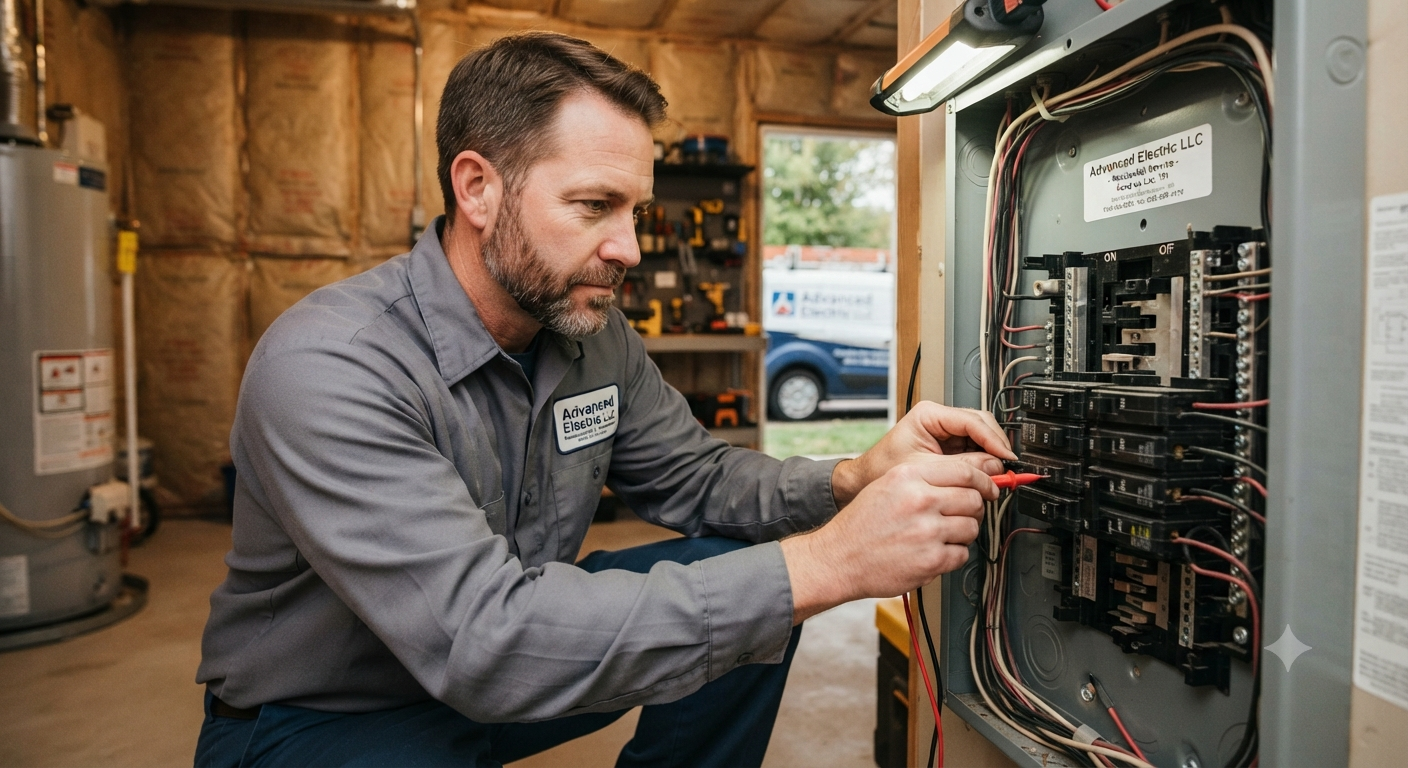
A circuit breaker monitors the electrical current flowing through a specific circuit in your home. When current exceeds the breaker’s rated amperage, the breaker trips and cuts power to that circuit.
Most residential homes use 15 amp and 20 amp breakers for standard circuits. The National Electrical Code (NEC) requires that continuous loads stay at or below 80% of a breaker’s rated capacity. For a 20 amp breaker, that means 16 amps is the safe continuous limit. Exceeding that threshold causes the breaker to trip as a protective measure.
Breakers wear down over time. The Electrical Safety Foundation International (ESFI) recommends having your electrical panel inspected by a licensed electrician every 10 years, or sooner if you experience frequent tripping.
Why Does My Circuit Breaker Keep Tripping?
Three root causes explain nearly every case of a circuit breaker that keeps tripping: overloaded circuits, short circuits, and ground faults. Each has distinct warning signs and requires a different response.
Overloaded Circuit
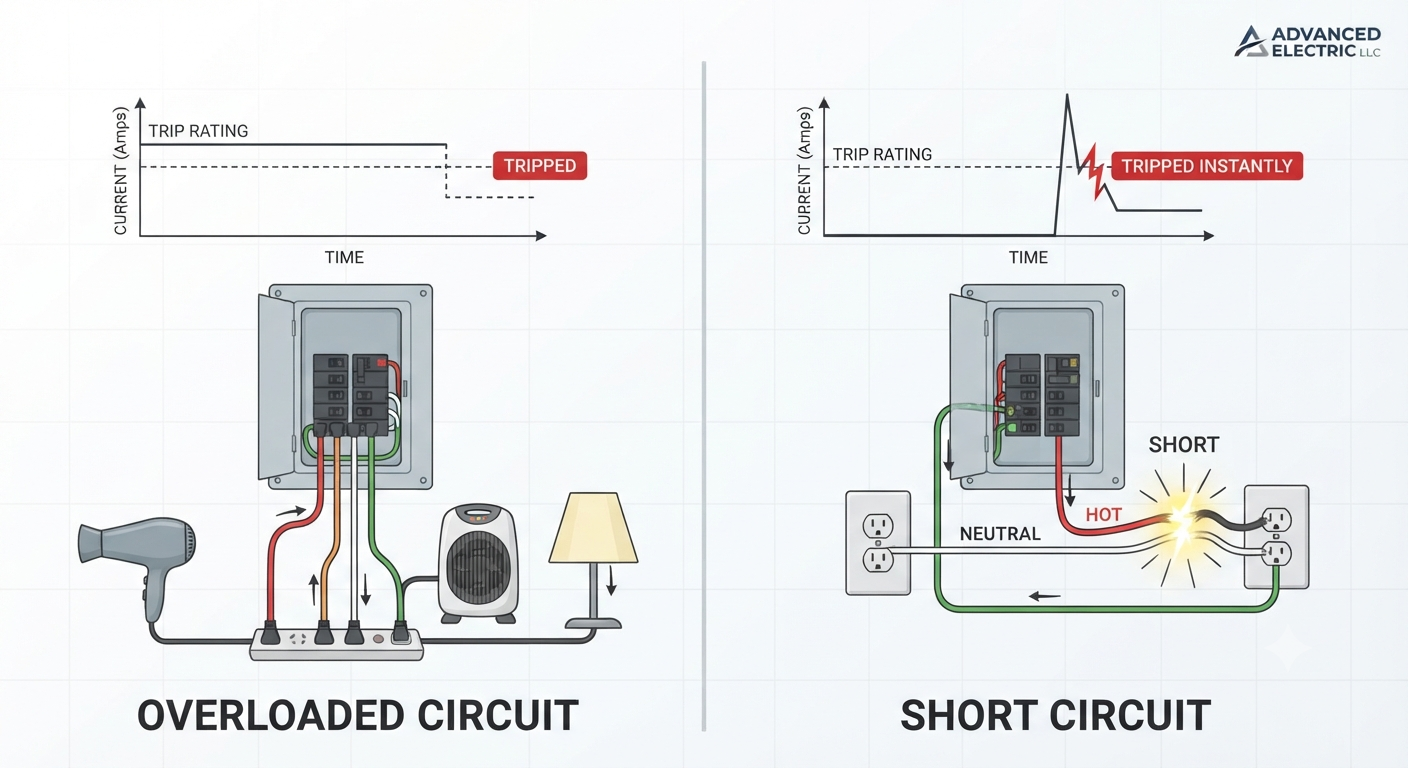
An overloaded circuit is the most common reason a breaker trips repeatedly. It happens when the total electrical demand on a single circuit exceeds the breaker’s rated amperage. Running a hair dryer, space heater, and microwave on the same 15 amp circuit, for example, can easily exceed the safe load.
Signs of an overloaded circuit:
The breaker trips when you plug in or turn on a specific appliance. Lights dim momentarily when large appliances start. Outlets feel warm to the touch. Multiple high wattage devices share the same circuit.
What to do:
Unplug devices from the affected circuit and redistribute them across different circuits. Avoid using extension cords and power strips as permanent solutions. If the problem persists after redistributing devices, you may need a dedicated circuit installed for high draw appliances like your dryer, HVAC system, or hot water heater. A licensed electrician can add new circuits and upgrade your electrical panel to support modern electrical demands.
Short Circuit
A short circuit occurs when a hot wire contacts a neutral wire or another hot wire, creating a path of minimal resistance. This causes a sudden spike in current that trips the breaker immediately. Short circuits are more serious than overloads and often indicate damaged wiring.
Signs of a short circuit:
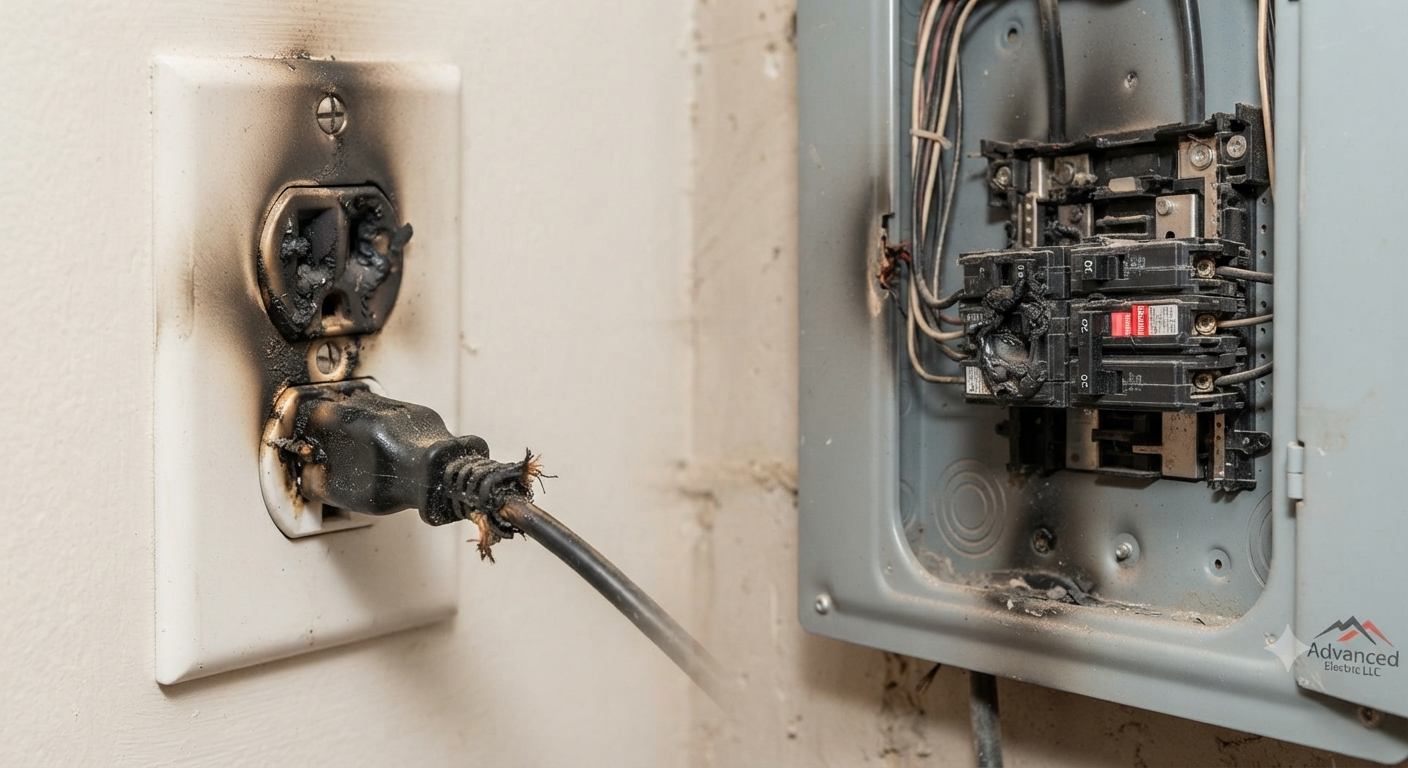
The breaker trips immediately after being reset. You notice a burning smell near outlets, switches, or the panel. Scorch marks or discoloration appear around outlets. The breaker trips even with nothing plugged in.
What to do:
Do not continue resetting a breaker that trips immediately. Inspect visible wiring and outlet connections for damage. If the problem happens inside the walls or at the panel, contact a licensed electrician for emergency electrical services. Short circuits can cause electrical fires if left unaddressed.
Ground Fault
A ground fault happens when a hot wire touches a grounded surface, such as a metal junction box or a grounded appliance casing. The current takes an unintended path to ground, which trips the breaker. Ground faults are especially common in areas with moisture exposure like kitchens, bathrooms, garages, and outdoor spaces.
Signs of a ground fault:
A GFCI outlet keeps tripping or will not reset. The breaker trips when using appliances near water. You feel a mild tingle or shock when touching an appliance or fixture.
What to do:
Test and reset GFCI outlets in the affected area. If the GFCI will not hold, the appliance or the wiring behind the outlet may be faulty. Ground faults in wet locations require professional diagnosis. An electrician will test each connection to isolate the fault and repair or replace the damaged component.
Which Appliances Trip Circuit Breakers Most Often?
Certain household appliances draw more current than others and are responsible for the majority of breaker trips. Knowing which devices are high risk helps you troubleshoot faster.
Air conditioners and HVAC systems: Central AC units draw significant startup current (called inrush current) that can momentarily exceed breaker capacity, especially on aging circuits. Window air conditioning units on shared circuits are a frequent cause of summer tripping.
Electric dryers: Most dryers operate on dedicated 30 amp circuits. A dryer that trips its breaker may have a faulty heating element, a clogged vent restricting airflow, or a worn power cord.
Water heaters: Electric water heaters use 240 volt dedicated circuits. A tripping breaker on a water heater circuit often points to a failing heating element or corroded wiring connections inside the unit.
Furnaces: A furnace breaker that trips during heating season can indicate a blower motor drawing excessive current or a short in the thermostat wiring. The Consumer Product Safety Commission (CPSC) recommends professional inspection of any furnace electrical issue before the heating season begins.
Kitchen appliances: Microwaves, dishwashers, and garbage disposals share kitchen circuits in many older homes. The NEC now requires dedicated circuits for many of these appliances in new construction, but older homes may still have shared wiring.
Is It Dangerous if a Circuit Breaker Keeps Tripping?
Yes, a circuit breaker that trips repeatedly signals an underlying electrical problem that could lead to overheated wiring, melted insulation, or an electrical fire. The National Fire Protection Association (NFPA) reports that electrical distribution equipment, including overloaded circuits, is a leading cause of residential fires. Never ignore a breaker that trips more than once on the same circuit.
The danger increases when homeowners respond by:
Repeatedly resetting the breaker without addressing the cause. Replacing a breaker with a higher amperage rating (this removes the safety limit and allows wires to overheat). Using multiple extension cords or power strips to work around insufficient outlets. Taping a breaker in the “on” position. Each of these workarounds defeats the purpose of the breaker and creates conditions where an electrical fire can start inside your walls without any visible warning.
How to Troubleshoot a Tripping Circuit Breaker Safely
Before calling an electrician, you can perform basic troubleshooting to narrow down the cause. Follow these steps in order and stop if you encounter any signs of burning, melting, or visible wire damage.
Step 1: Identify the tripped breaker. Open your electrical panel and look for the breaker that has moved to the middle position (between ON and OFF). Note which circuit it controls by reading the panel label.
Step 2: Unplug everything on that circuit. Disconnect all devices and appliances from outlets on the affected circuit. Turn off any hardwired fixtures controlled by the circuit.
Step 3: Reset the breaker. Push the breaker fully to the OFF position, then flip it back to ON. If it holds, the problem is likely one of the devices you unplugged.
Step 4: Reconnect devices one at a time. Plug devices back in one by one, waiting 30 seconds between each. When the breaker trips again, the last device you connected is likely the culprit.
Step 5: Test the problem device on a different circuit. Move the suspected appliance to an outlet on a different circuit. If the new circuit also trips, the appliance has an internal fault and needs repair or replacement.
If the breaker trips with nothing plugged in, the problem is in the wiring itself. This indicates a short circuit or ground fault inside the walls, and you need a licensed electrician to diagnose and repair the issue safely. Review your electrical safety checklist to identify other potential hazards in your home.
When Should You Call an Electrician for a Tripping Breaker?
Some breaker issues require professional diagnosis and repair. Call a licensed electrician if any of the following apply:
The breaker trips with nothing plugged into the circuit. You smell burning near outlets, switches, or the panel. Visible scorch marks or discoloration appear on outlets or wiring. The breaker will not stay in the ON position after resetting. Multiple breakers trip at the same time. Your home is more than 30 years old and has not had an electrical inspection. You are adding major appliances like EV chargers, hot tubs, or central air conditioning to your home.
If you smell burning, see smoke, or notice scorch marks, treat it as an emergency. Our guide to emergency electrician help in Fond du Lac explains who to call first.
At Advanced Electric LLC, our licensed electricians serve homeowners in Fond du Lac, Milwaukee, Madison, and Oshkosh with full circuit diagnostics, electrical panel upgrades, dedicated circuit installation, and whole house surge protection. We identify the root cause on the first visit and provide clear, upfront pricing before any work begins.
Frequently Asked Questions
Can I just replace a 15 amp breaker with a 20 amp breaker to stop the tripping?
No. The breaker rating must match the wire gauge of the circuit. A 15 amp breaker protects 14 gauge wiring. Installing a 20 amp breaker on 14 gauge wire removes the overload protection and allows the wire to overheat, which creates a fire hazard. Only a licensed electrician should change a breaker size, and only after confirming the wiring supports the higher rating.
Why does my breaker trip when nothing is plugged in?
A breaker that trips with nothing connected typically indicates a short circuit or ground fault inside the wiring. Damaged insulation, a pinched wire behind a wall, or moisture in a junction box can all cause this. An electrician will use specialized testing equipment to locate the exact point of failure without unnecessary wall demolition.
How often should circuit breakers be replaced?
Circuit breakers do not have a fixed replacement schedule, but most manufacturers recommend replacement after 15 to 20 years. Breakers that trip frequently, feel hot, or show visible damage should be replaced sooner. If your panel uses Federal Pacific Electric (FPE) Stab Lok or Zinsco breakers, the CPSC has documented safety concerns with these brands, and replacement is strongly recommended.
Is a tripping breaker covered by homeowner’s insurance?
Standard homeowner’s insurance typically covers damage caused by electrical failures (such as a fire from faulty wiring) but does not cover the cost of upgrading or repairing the electrical panel itself. Check your policy’s electrical exclusions and consider requesting an electrical inspection if your home is older than 25 years.
What is the difference between a tripped breaker and a blown fuse?
Both serve the same purpose of interrupting current during an overload or fault. A circuit breaker can be reset and reused. A fuse contains a metal filament that melts permanently and must be replaced. Older homes in Wisconsin may still have fuse boxes that should be upgraded to modern breaker panels for improved safety and capacity.
Protect Your Home with Professional Circuit Breaker Diagnostics
A circuit breaker that keeps tripping is doing its job by protecting your home from electrical hazards. The real problem lies in the overload, short circuit, or ground fault causing the breaker to activate. Identifying and fixing that root cause prevents wiring damage, reduces fire risk, and restores reliable power to the affected circuit.
If basic troubleshooting does not resolve the issue, or if you notice any warning signs like burning smells, scorch marks, or breakers that trip with nothing plugged in, schedule a professional inspection with a licensed electrician.
Advanced Electric LLC provides expert circuit breaker diagnostics, residential electrical services, and panel upgrades for homeowners in Fond du Lac, Milwaukee, Madison, and Oshkosh, Wisconsin.
Call (920) 921 2499 or email info@advancedelectricllc.com to schedule your inspection today.
213 W 9th St, Fond du Lac, WI 54936 | Mon through Fri, 9:00 AM to 3:00 PM
Related reading: Learn more about handling an electrical emergency.