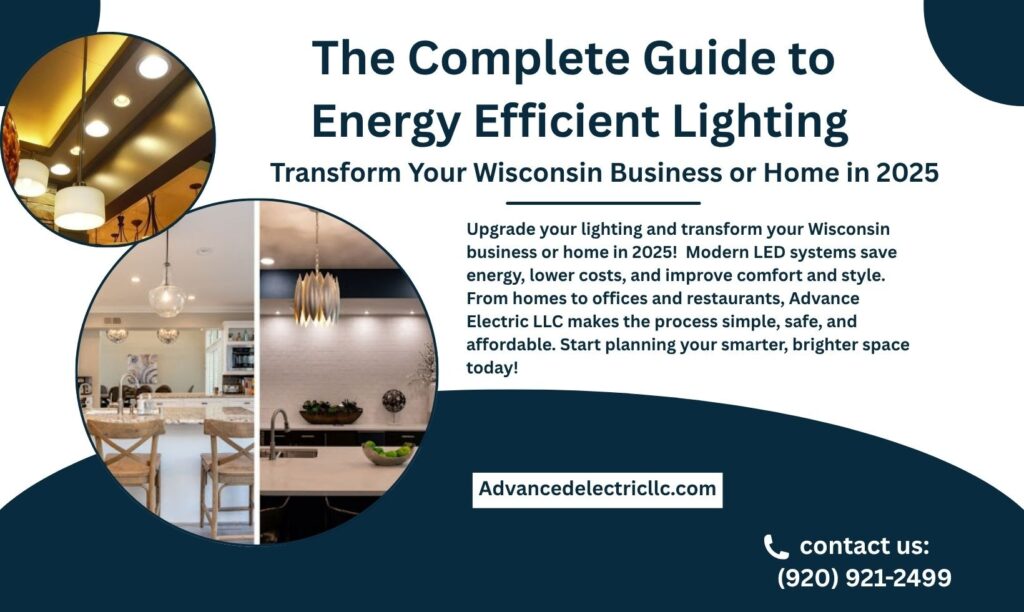
Energy Efficient Lighting
In this guide, I will help Wisconsin homeowners and business owners make smart electrical upgrades that save both money and energy. In 2026, lighting isn’t just about installing brighter bulbs, it’s about creating smarter, more efficient spaces that work for you and reduce wasted energy.
If you’re running a local shop or managing a busy household near Wisconsin cities, I will show you how upgrading your lighting can truly transform your Wisconsin business or home. It’s one of the easiest and most impactful ways to lower energy costs while improving comfort, safety, and design.
Why Energy Efficient Lighting Matters in 2026
Lighting has changed a lot over the years. Traditional bulbs are being replaced by LEDs, and for good reason they use less electricity, last way longer, and you can even control brightness and color right from your phone. But it’s not just about saving on your electric bill. Good lighting makes your space work better and helps reduce waste. With electricity prices going up, switching to efficient lighting in 2026 is one of the smartest moves you can make. It pays off fast.
Energy-efficient lighting works by converting more electricity into usable light and less into wasted heat. Traditional incandescent bulbs waste a significant amount of energy through heat generation, while modern LED technology delivers the same or better brightness using only a fraction of the power. This increased efficiency directly translates into lower electricity bills for homeowners and business owners alike.
Advanced Electric llc provides Wisconsin homeowners and business owners with modern lighting solutions for homes, offices, restaurants, and warehouses, creating brighter, more efficient spaces with every project.
LED Lighting Rebates by State
One of the best parts of upgrading your lighting is that you don’t have to do it alone; there are rebates and incentive programs available to help reduce your costs.
In Wisconsin, the Focus on Energy program provides financial rewards to both homeowners and businesses that switch to qualified energy-saving lighting systems. From LED bulbs to advanced motion sensors, you can earn rebates for almost any upgrade that lowers your energy use.
If you’re outside Wisconsin, don’t worry many states offer similar programs. The LED lighting rebates by state vary, but most follow a similar model: you purchase approved products, submit proof, and receive a check or bill credit.
For the most accurate details, check your local energy lighting incentive catalog, which lists all the current offers for 2026. These catalogs are updated yearly and can help you see exactly what kind of savings apply to your lighting project.
Follow the Energy Efficiency Best Practice Guide
When it comes to energy-efficient lighting, success depends on more than just installing LEDs. It’s about using them wisely. Below are some key takeaways inspired by the steps we follow on every professional project:
Start with a Lighting Audit
Identify which areas waste the most energy. Old fluorescent fixtures or outdated halogens usually use far more power than needed.
Use Smart Controls and Sensors
Add dimmers, timers, or motion sensors to automatically control light use. You’ll save energy even when you forget to switch lights off.
Choose the Right Color Temperature
Warm white works best for homes, while cooler tones suit offices and commercial spaces. It improves productivity and comfort.
Upgrade Fixtures, Not Just Bulbs
Replacing old fixtures allows for better light distribution and easier maintenance.
Regular Maintenance and Monitoring
Keep your lighting system clean and efficient. A simple routine check can extend your equipment’s lifespan significantly.
Following these proven methods will not only transform your Wisconsin business or home, but also give you long-term savings and a better experience overall.
How Energy-Efficient Lighting Can Reduce Your Electricity Bills
One of the biggest reasons homeowners and businesses switch to energy-efficient lighting is the immediate reduction in electricity costs. LED bulbs consume significantly less energy than traditional incandescent or halogen bulbs while producing the same level of brightness.
For example, a traditional 60-watt incandescent bulb can often be replaced with an LED bulb using only 8 to 12 watts. Over time, this reduction in energy consumption can lead to substantial savings, especially in properties where lights operate for several hours each day.
Energy-efficient lighting also reduces maintenance expenses because LED bulbs last much longer than conventional lighting options. Fewer replacements mean lower material costs and less time spent changing bulbs in residential and commercial properties.
Additional Benefits Beyond Lower Energy Bills
Switching to energy-efficient lighting offers advantages beyond utility savings:
- Reduced environmental impact through lower energy consumption
- Longer bulb lifespan compared to traditional lighting
- Improved light quality and visibility
- Lower heat generation, which can reduce cooling demands during warmer months
- Greater compatibility with smart controls, dimmers, and automation systems
These benefits make energy-efficient lighting one of the most cost-effective upgrades available for Wisconsin homes and businesses.
The Benefits of Upgrading to Energy Efficient Lighting
Switching to modern LED and smart lighting systems comes with a full range of benefits:
- Lower Energy Bills: Save up to 75% compared to old incandescent bulbs.
- Longer Lifespan: LEDs last 10x longer, reducing maintenance costs.
- Better Light Quality: Brighter, clearer light improves visibility and atmosphere.
- Eco-Friendly: Reduces carbon emissions and energy waste.
- Property Value: Modern, efficient lighting can increase your home or business value.
For business owners, this also means improved employee comfort and better presentation of your products or services. For homeowners, it means more cozy evenings, better lighting control, and noticeable savings on monthly bills.
Choosing the Right Energy-Efficient Lighting Solution
Not all energy-efficient lighting options are the same. Selecting the right solution depends on your goals, budget, and application.
LED Lighting
LED bulbs are the most popular and efficient lighting option available today. They use up to 75–90% less energy than traditional incandescent bulbs and can last tens of thousands of hours. Their durability, low operating costs, and excellent light quality make them ideal for both residential and commercial spaces.
Compact Fluorescent Lighting (CFLs)
CFL bulbs use less energy than traditional incandescent bulbs and offer a longer lifespan. While they remain an efficient option, many homeowners and businesses now prefer LEDs because of their superior efficiency, performance, and environmental advantages.
Halogen Lighting
Halogen bulbs are more efficient than traditional incandescent lighting but consume more energy than LEDs and CFLs. They can provide bright, crisp illumination but are generally considered a less cost-effective long-term solution for energy-conscious property owners.
Calculating Potential Energy Savings
Many property owners are surprised by how much they can save by upgrading their lighting systems. The amount depends on the number of fixtures, hours of operation, local electricity rates, and the type of lighting being replaced.
Even replacing a few frequently used bulbs with LED alternatives can generate noticeable annual savings. In larger commercial facilities, the financial impact can be even greater due to extended operating hours and higher fixture counts.
A professional lighting assessment can help determine which upgrades will deliver the greatest return on investment while maximizing energy efficiency throughout the property.
Lighting Solutions You Can Trust – Advanced Electric LLC
When it comes to lighting upgrades, experience and precision matter. At Advanced Electric LLC, we specialize in designing and installing energy-efficient systems tailored to your space and budget.
We handle everything from helping you identify rebate opportunities to setting up your new lighting safely and professionally. Our mission is simple: to transform your Wisconsin business or home with reliable, modern, and sustainable lighting solutions that last.
If you’re not sure where to start, our team can walk you through the process step-by-step. We specialize in residential and commercial lighting upgrades. We’ll review your current setup, explain your options, and recommend upgrades that make sense for you.
Energy-Efficient Lighting for Businesses
Commercial facilities often experience some of the greatest benefits from lighting upgrades because lights typically remain on for extended periods throughout the day. Offices, warehouses, retail stores, restaurants, and industrial facilities can significantly reduce operating costs through modern LED lighting systems.
Beyond lowering energy expenses, improved lighting can enhance employee productivity, increase workplace safety, and create a more welcoming environment for customers. Combined with available rebate programs, energy-efficient lighting upgrades can deliver a strong return on investment for Wisconsin businesses.
The Future of Energy-Efficient Lighting
Lighting technology continues to evolve with advancements in smart controls, occupancy sensors, automated scheduling, and human-centric lighting systems. These innovations allow property owners to optimize energy use while improving comfort and convenience.
As energy efficiency standards continue to advance, investing in modern lighting today helps prepare homes and businesses for future technologies while maximizing long-term savings.
Transform Your Wisconsin Space with Smart Lighting
Upgrading to energy-efficient lighting in 2026 isn’t just a smart financial move, it’s a step toward a brighter, greener future. Whether you manage a business or own a home, the right lighting can completely transform your Wisconsin business or home, reducing energy use while enhancing comfort and style.
We’re here to make the process simple and affordable. Let’s start planning your upgrade today and light the way to a more efficient tomorrow.
Ready to Get Started?
If you’re ready to make your lighting smarter, brighter, and more efficient, contact us today. Let’s make 2026 the year you transform your Wisconsin business or home with lighting that truly makes a difference.
FAQs
Q1: What are the benefits of switching to energy-efficient lighting?
Ans: Energy-efficient lighting lowers energy bills, lasts longer, improves brightness, and supports eco-friendly living. It’s a smart investment that delivers long-term savings.
Q2: How much can I save by switching to LED lighting?
Ans: Savings vary based on usage, but LED bulbs can use up to 75% less energy than traditional incandescent bulbs, helping reduce electricity costs significantly over time.
Q3: How can I make my lighting system more efficient?
Ans: You can improve lighting efficiency by installing LED fixtures, using smart lighting controls, selecting the right fixtures for each space, and performing regular maintenance.
Q4: Are LED bulbs better than CFL bulbs?
Ans: Yes. LED bulbs are generally more energy-efficient, last longer, contain no mercury, and provide better long-term value compared to CFL bulbs.
Q5: Can energy-efficient lighting help businesses reduce operating costs?
Ans: Absolutely. LED lighting upgrades can significantly reduce electricity consumption and maintenance expenses, helping businesses lower their overall operating costs.