TL;DR: Aluminum wiring in homes built from 1965 to the mid 1970s can overheat at outlets, switches and splices. The U.S. Consumer Product Safety Commission (CPSC) recognizes three permanent fixes: a full copper rewire, COPALUM crimp connectors, or AlumiConn connectors. Warm faceplates, flickering lights or a burning smell mean you should stop using that circuit and call a pro. For an inspection in Fond du Lac, call Advanced Electric LLC at (920) 921-2499.
Was your Fond du Lac home built or added onto in the late 1960s or early 1970s? Then it may have aluminum wiring, and many owners never know it is there. Aluminum wiring in homes looks a lot like copper cable from the outside, and it can work quietly for decades. The trouble is what happens at the connections over time.
Aluminum branch circuit wiring was installed in many American homes when copper prices climbed. The CPSC later linked failing aluminum connections to overheating and house fires. That history matters for Wisconsin homeowners, especially when our long winters keep heaters, lights and appliances running for months.
This guide covers which homes have it and why the connections fail. It also explains how to check safely, what fixes the CPSC accepts, and when to call for help. We will also clear up a common mix up about the aluminum cable that feeds your panel.
Advanced Electric LLC has handled residential wiring work in Fond du Lac since 1998. We treat every aluminum wiring job with a safety first mindset.
Which Wisconsin Homes Have Aluminum Wiring?
Homes wired from about 1965 to the mid 1970s are the most likely to have aluminum branch circuits. The CPSC says homes built before 1965 rarely have it. Additions and rewired circuits from that window can contain it too, even in an older house.
The CPSC publication Repairing Aluminum Wiring sets that 1965 to mid 1970s window. Another CPSC news release counted about 2 million homes wired with aluminum from 1965 to 1973.
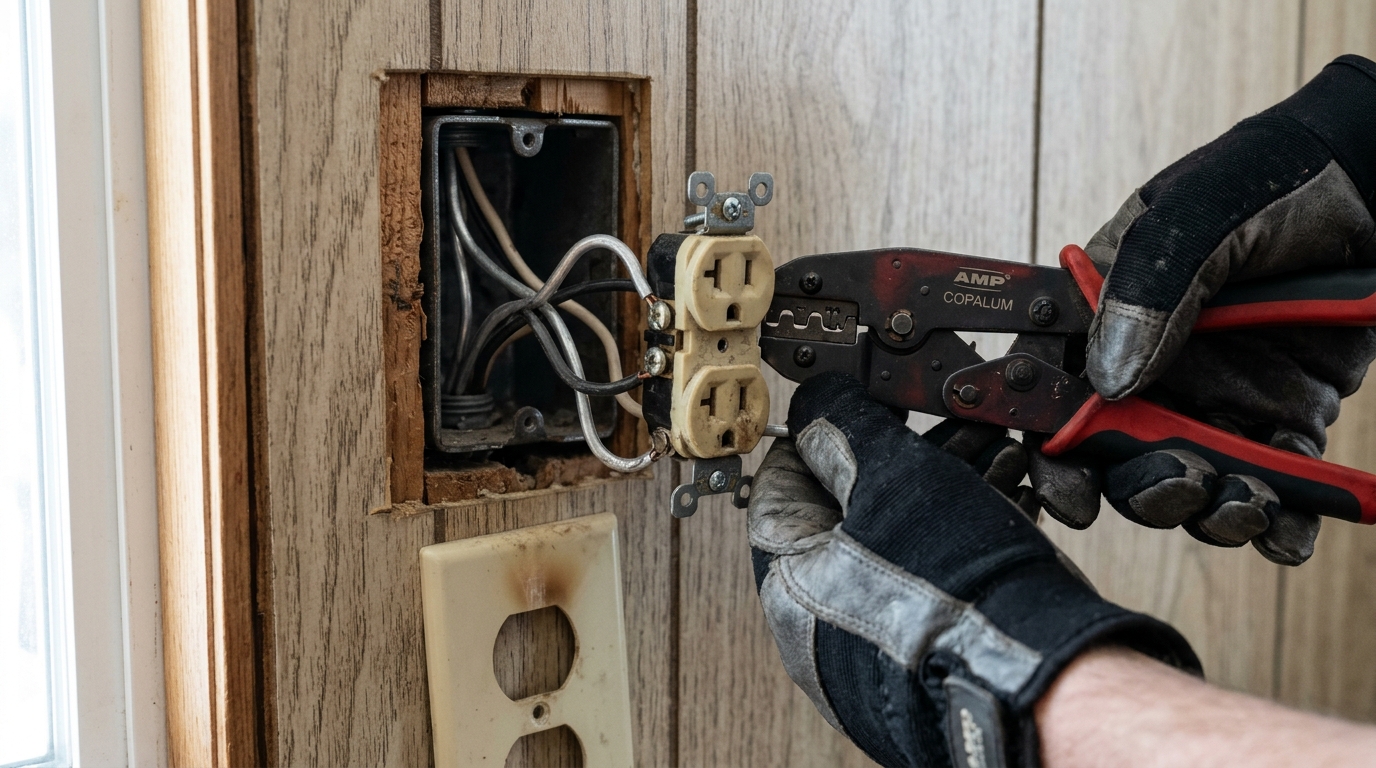
So a 1970 ranch home in Fond du Lac is worth a closer look. A 1920s home with a 1972 kitchen addition is worth a look as well. Homes older than that often have other wiring concerns. We cover one in our guide to knob and tube wiring.
Why Is Aluminum Wiring in Homes a Fire Risk?
The wire itself rarely fails in the middle of a run. The risk sits at connections, where outlets, switches, lights and splices meet the aluminum. Those joints can slowly lose contact, build resistance and get hot enough to start a fire inside a wall.
The numbers are sobering. A national CPSC survey looked at homes built before 1972. Aluminum wired homes were 55 times more likely than copper ones to have an outlet reach fire hazard conditions. That means cover plate screws reaching 300°F, sparks, or charring of nearby material, per the CPSC repair guide. It also notes the damage builds up over time.
Why do the connections break down? A 1975 federal study by the National Bureau of Standards found several causes.
- A thin aluminum oxide film that can interrupt the current path
- Steel screws and aluminum wire expanding at different rates as they heat and cool
- Some older aluminum alloys slowly creeping under pressure, which loosens the contact
- Loose connections, often from screws that were never tightened enough
A later IAEI Magazine history of aluminum wire adds that poor workmanship was the main source of failed connections. Wires were sometimes wrapped the wrong way or put on devices made only for copper.
How Can You Tell If Your Home Has Aluminum Wiring?
Look at the outside jacket of visible cables in an unfinished basement, attic or garage. Cable marked “AL” or “ALUMINUM” contains aluminum conductors. Do not remove cover plates, open boxes or open your panel. If you cannot read the markings, have a licensed electrician check.
The CPSC says most aluminum branch wiring is plastic sheathed cable. It looks like copper cable from the outside. The printing on the jacket can be faint. A flashlight held at a low angle often makes it easier to read.
Some cable is labeled as copper clad aluminum. That is a different product, and the CPSC repair advice does not cover it. A pro should sort that out for you.
You may hear advice to look for silver colored wire at the panel. Please leave that to us. The CPSC warns homeowners not to open the panel because of shock risk. See its 2003 safety release. A home inspector or qualified electrician can confirm what you have.
Repair Options for Aluminum Wiring in Homes
The CPSC recognizes three permanent repairs. Each one has a clear place, and all of them belong in the hands of a licensed electrician.
Full rewire with copper. The CPSC calls this the best method available. It also admits a full rewire is often impractical or very costly. If you are weighing that path, our guide on budgeting for a whole home rewire walks through the planning.
COPALUM crimp connectors. This method attaches a short copper wire, called a pigtail, to each aluminum wire with a special crimp. The CPSC says the repair should cover every aluminum connection in the home, not only outlets. Only electricians trained by the manufacturer are authorized to install it.
AlumiConn connectors. The CPSC lists this set screw pigtail connector as an acceptable choice when COPALUM is not available. It also says the product is too new to have a long track record like COPALUM. The maker says its listed install method calls for a torque screwdriver. That sets each screw to a precise tightness.
The CPSC does not consider some common shortcuts to be a full fix. It calls pigtails made with ordinary twist on connectors not a recommended repair. It says outlets and switches rated CO/ALR are at best an incomplete repair. Either one may serve as a short term emergency fix until a proper repair is done.
Old Branch Wiring vs. Modern Aluminum Service Cable
Not all aluminum in your home is a red flag. The concern above is about small, single strand aluminum branch circuits that feed outlets, switches and lights. The large cable that brings power into your home is a different story.
An IAEI Magazine article on aluminum alloy conductors notes that most homes have aluminum conductors for the service entrance. Aluminum is also often used for large loads like ranges, dryers and air conditioners. UL standards have required newer 8000 series aluminum alloys since the early 1970s.
The CPSC guide says its repair advice does not cover larger aluminum circuits. That includes service entrance cables, dryers and ranges. Those connections still need to be done right. They just are not the same problem as 1960s branch wiring.
When Should You Call a Licensed Electrician About Aluminum Wiring?
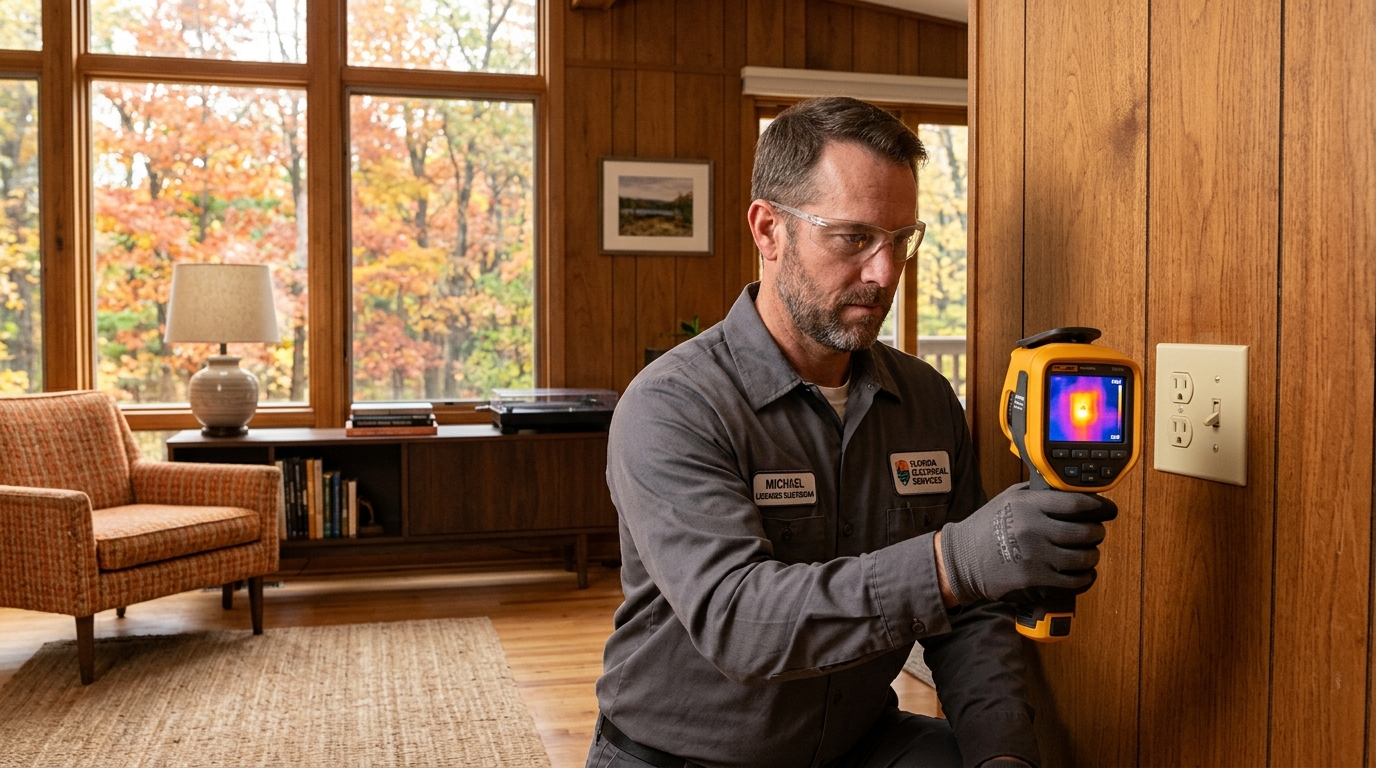
Call right away if you notice warm faceplates, flickering lights, dead circuits or a burning plastic smell. Also call if you just learned your home has aluminum branch wiring. The CPSC warns that some failing connections give no warning at all.
The CPSC lists these warning signs.
- Outlet or switch faceplates that feel hot to the touch
- Lights that flicker for no clear reason
- Circuits that stop working
- A smell of burning plastic at outlets or switches
If you notice one, stop using that outlet or switch. If it is safe to reach your panel, turn that one breaker off and leave it off. Then call us. The CPSC has long advised homeowners not to try these repairs themselves.
Flickering can have other causes, too. Our post on why lights flicker covers some of them. Still, in a home from this era, aluminum connections should be near the top of the list.
Wiring fires are no small matter. The Electrical Safety Foundation International estimates about 51,000 home electrical fires a year. They cause $1.3 billion in property damage. A scheduled home electrical inspection is a simple way to find trouble early.
Repairs must also meet state rules. Wisconsin adopts the National Electrical Code (NEC) by reference, with state modifications, in chapter SPS 316. A licensed electrician knows those rules and can pull the right permits.
Frequently Asked Questions
Is aluminum wiring safe?
Aluminum branch wiring from the 1960s and 1970s carries a higher fire risk at its connections than copper. The CPSC found older aluminum wired homes were far more likely to have outlet connections reach fire hazard conditions. A proper repair by a licensed electrician greatly reduces that risk.
What years was aluminum wiring used in homes?
The CPSC says aluminum branch circuit wiring was installed from about 1965 to the mid 1970s. Homes built before 1965 are unlikely to have it. Additions and rewired circuits from that period can contain it even in older homes.
Can I replace outlets on aluminum wiring myself?
No. The CPSC advises homeowners not to attempt these repairs, and the approved methods need special tools and training. Work inside boxes or the panel is a job for a licensed electrician.
Do I need to rewire my whole house if I have aluminum wiring?
Not always. The CPSC recognizes COPALUM crimp connectors and AlumiConn connectors as alternatives to a full copper rewire. An electrician can inspect your home and explain which option fits.
Is the aluminum cable that feeds my electrical panel a problem?
Large aluminum service entrance cable is common and is not the same concern as small aluminum branch wiring. The CPSC repair advice does not apply to service entrance cables, dryer circuits or range circuits. Those connections still need to be installed and checked correctly by a pro.
Call Advanced Electric LLC for a Free Estimate
Was your Fond du Lac home built or added onto from 1965 to the mid 1970s? Then it pays to know what is behind your walls. We can check visible cable markings and look for warning signs. We will also walk you through the CPSC recognized repair options in plain language.
Our team brings over 60 years of combined experience and a Clean Wiring approach to every job. Learn more about our residential electrical services in Fond du Lac, then reach out for a free estimate.
Call (920) 921-2499 or request a free estimate today.
213 W 9th St, Fond du Lac, WI 54935 | Mon through Fri, 7:00 AM to 4:00 PM