TL;DR: A generator transfer switch is the safe way to power home wiring from a portable or standby generator. It keeps generator and utility power apart. That stops backfeed that can hurt line workers or neighbors. Never plug a generator into a wall outlet. Run it outdoors, far from windows. For a safe, inspected installation in Fond du Lac, call Advanced Electric LLC at (920) 921-2499.
When a winter storm knocks out power in Wisconsin, a generator can keep your family warm. The hard part is connecting it to the house safely. A generator transfer switch is the piece of equipment that makes that connection safe. It is also the part many homeowners skip.
Without one, people take dangerous shortcuts. Some buy a cord with two plug ends and push power backward through a wall outlet. That shortcut can start a fire in your home. It can also kill a line worker down the street.
This guide explains what a transfer switch does and why backfeeding is so deadly. It compares manual and automatic switches and explains interlock kits. It also helps you pick which circuits to back up and covers carbon monoxide safety during a cold Wisconsin outage. Advanced Electric LLC has handled this kind of work in Fond du Lac since 1998.
What Does a Generator Transfer Switch Do?
A generator transfer switch lets your home use utility power or generator power, but never both at once. That separation stops generator power from flowing out onto utility lines. It also lets you safely run hardwired equipment like a furnace or well pump during an outage.
The Electrical Safety Foundation International calls a transfer switch the only safe way to run home wiring on a generator. You pick the power source. The switch keeps the other one disconnected.
OSHA warns never to attach a generator straight to a building’s wiring. The exception is a qualified electrician installing it with a transfer switch. The Illinois Extension generator safety page adds that a permanently connected generator must have a transfer switch.
If you have not picked a generator yet, start with our guide to choosing a backup generator. The switch and the generator need to work together.
Why Is Backfeeding So Dangerous?
Backfeeding happens when generator power flows backward out of your house and onto utility lines. Those lines then carry live power during an outage. That can electrocute line workers, first responders, and neighbors. It can also start a fire in your home.
The Consumer Product Safety Commission (CPSC) says never to plug a generator into a wall outlet. It warns this backfeeding can electrocute utility workers and neighbors. An advisory from FEMA’s U.S. Fire Administration, shared by Maryland Emergency Management, adds that backfeed can energize the power lines on your street.
Generac’s backfeed safety article adds that generator power can clash with utility power when service returns. That can cause fires and damage equipment. The CDC gives a similar fire hazard warning.
Then there is the “suicide cord,” a cord with a plug on both ends. In 2026 the CPSC told consumers to stop using these double male cords and throw them away. Their exposed prongs can carry live power, so a single touch can electrocute you. Never use one.
Should You Choose a Manual or Automatic Transfer Switch?
Choose based on your generator. A manual transfer switch works with a portable generator, and you flip it yourself. An automatic transfer switch works with a home standby generator and switches on its own when utility power fails. Each one keeps the two power sources apart.
A manual transfer switch usually pairs with an outdoor power inlet box. Generac’s manual transfer guide calls the inlet an outside connection point for the generator cord. No cords snake through a cracked window. The guide says manual switches work with portable generators only.
An automatic transfer switch, or ATS, does the work for you. Generac’s ATS explainer says it moves your home to generator power when an outage is detected. It breaks one connection before making the other, which prevents backfeeding.
A manual switch suits someone who owns a portable unit and can go outside to start it. An automatic switch means nobody steps into a snowstorm to restore power.
Where Generator Interlock Kits Fit In
A generator interlock kit is another way some homes connect a generator. It is a mechanical device for the electrical panel. It keeps the main breaker and a generator breaker from being on at the same time.
Schneider Electric explains its Square D kits in a product support FAQ. Each kit pairs a specific main breaker with a specific branch breaker. Some panel series have no kit at all.
So an interlock must match your exact panel. Local code and your electrical inspector decide whether one is allowed for your home. If your panel is old or full, you may need an electrical panel upgrade first.
Which Circuits Should a Transfer Switch for Generator Power Cover?
Back up the circuits that keep your home safe and livable during a Wisconsin winter. For most homes that means the furnace blower, sump pump, well pump, and refrigerator. Then add lighting and a few outlets. The total must stay within your generator’s rating.
Motors pull extra power for a moment when they start. A utility sizing worksheet lists a 1/3 horsepower furnace fan at 700 running and 1,400 starting watts. It lists a refrigerator at 700 running and 2,200 starting watts. You add only the largest starting surge to your total.
Common circuits to back up in Fond du Lac homes:
- Furnace blower and controls, so the furnace can heat
- Sump pump, to keep a basement dry during a thaw
- Well pump, for homes outside city water
- Refrigerator and freezer, to protect food
- A few lights and outlets
Illinois Extension advises turning on appliances one at a time to avoid overloading the generator. We plan the switch and circuit list around the generator you have.
Wisconsin Winter Outages and Carbon Monoxide Safety
A transfer switch solves the wiring problem. It does nothing about exhaust. Generators make carbon monoxide, a gas you can’t see or smell.
The CPSC estimates nearly 100 people die in the U.S. each year from generator carbon monoxide. It also reports that 81 percent of generator deaths happen at homes.
Follow these rules:
- Run the generator outdoors only, at least 20 feet from the house, per the CPSC.
- Keep it at least 20 feet from windows and vents, as ReadyWisconsin advises.
- Never run it in a garage, basement, or crawl space. OSHA says open doors may not stop the gas from building up.
- Install carbon monoxide alarms on every level and outside bedrooms. Test them monthly.
ESFI warns that carbon monoxide can kill in as little as 5 minutes. If an alarm sounds, get everyone outside and call 911. Our winter electrical preparation guide covers more cold weather checks. For upkeep between storms, read our generator maintenance tips.
When to Call a Licensed Electrician
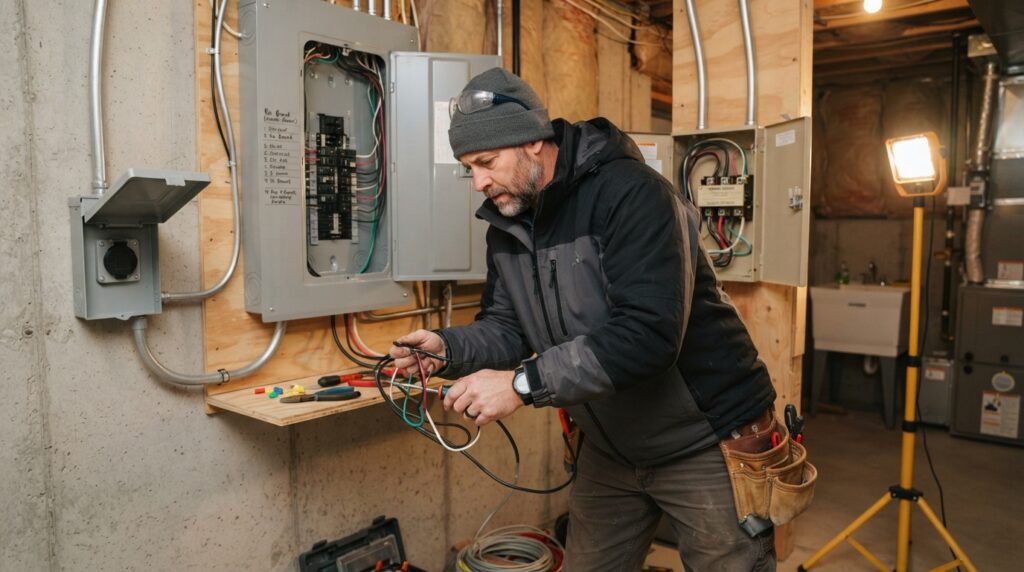
Installing a transfer switch means working inside your electrical panel. That is never a do it yourself job. Wisconsin adopted the 2023 National Electrical Code (NEC) on September 1, 2026, according to the Wisconsin Department of Safety and Professional Services.
Plan for a permit and inspection on this work. Our page on Wisconsin electrical permits explains the process in Fond du Lac.
Call a licensed electrician if any of these apply:
- You own a double male cord or have backfed through an outlet. Stop today.
- Lights flicker or appliances act strangely on generator power.
- The generator breaker trips often, or you smell hot plastic near the panel.
- Your panel is old, crowded, or has no room for a transfer switch or interlock.
- You want to run a furnace, well pump, or sump pump but have no safe connection.
Generator Transfer Switch FAQ
Do I need a transfer switch to use a portable generator?
You need one if you want to power any circuits in your home’s wiring. A transfer switch keeps generator power from flowing back onto utility lines. If you only plug appliances straight into the generator with outdoor rated cords, no switch is involved.
Can I plug my generator into a wall outlet?
No. The CPSC calls this backfeeding and warns it can electrocute utility workers and neighbors. It can also start a fire in your home. Use a properly installed transfer switch instead.
What is the difference between a manual and an automatic transfer switch?
A manual transfer switch works with a portable generator, and you move the switch by hand. An automatic transfer switch works with a home standby generator. It moves your home to generator power when it detects an outage. Both keep utility and generator power apart.
Is a generator interlock kit allowed in Wisconsin?
It depends on your panel and on local code. Interlock kits are made for specific panel models, and some panels have no matching kit. Your electrical inspector makes the final call, so have a licensed electrician check your panel first.
How far from my house should a generator run?
The CPSC says to run a portable generator outdoors at least 20 feet from your home. ReadyWisconsin also says to keep it at least 20 feet from windows and vents. Never run one in a garage or basement, even with the door open.
Call Advanced Electric LLC for a Free Estimate
A generator only helps if it connects to your home safely. We install transfer switches for Fond du Lac homeowners who want heat and water during an outage. Our team brings over 60 years of combined experience and a safety first approach.
We will look at your panel, your generator, and the circuits you need. Then we give you clear, affordable options. Learn more about our residential electrical services before winter sets in.
Call (920) 921-2499 or request a free estimate today.
213 W 9th St, Fond du Lac, WI 54935 | Mon through Fri, 7:00 AM to 4:00 PM